

Recently, Zhao Lusi's beauty brand ROSE AMIGO centrally filed 6 new products in the POCKET BEAUTY series, ranging from oil-control pads, soothing pads, and eye patches to eye and lip makeup removers and bare-face correction products, covering multiple light-care scenarios. Although their functions appear diverse, 6 products share the same core ingredient story: apple blossom-derived PDRN (APPLE PAP).
Most noteworthy is one of the eye and lip makeup removers. PDRN is not responsible for dissolving makeup, and as a nucleic acid macromolecule, it already faces challenges in topical delivery; furthermore, eye and lip makeup removers typically have even shorter contact time with the skin.
When an ingredient that was once mainly active in medical aesthetics and functional skincare begins to be included in makeup removal products that can be wiped off within tens of seconds, it is clearly no longer an exclusive ingredient for a single essence bottle.
ROSE AMIGO's entry is more like a microcosm. Over the past two years, from salmon PDRN to plant PDRN, microalgae PDRN, microbe-derived nucleic acids, and then recombinant biological manufacturing routes, the sources and manufacturing methods of PDRN are rapidly expanding; meanwhile, delivery technologies such as low-molecular-weight formulation, liposomes, and nanocarriers are being brought to the forefront with increasing frequency.
As PDRN itself gradually loses its scarcity, the real competition has turned to another set of questions: where PDRN comes from, how large its molecules are made, how it penetrates the skin, and what brands ultimately use to prove that it is truly effective.

ROSE AMIGO's use of PDRN this time did not follow a conventional path.
Judging from the 6 new products that have completed filing, the brand did not launch a typical PDRN essence or cream, but instead unified the new products under the "POCKET BEAUTY" series: 5 cotton pads and 1 eye patches, covering different scenarios such as oil control, eye and lip makeup removal, and eye area care.
The series will begin pre-sales on 9 month 25 day. The common ingredient throughout the series is named APPLE PAP, which the brand calls the new generation of apple blossom-derived PDRN.
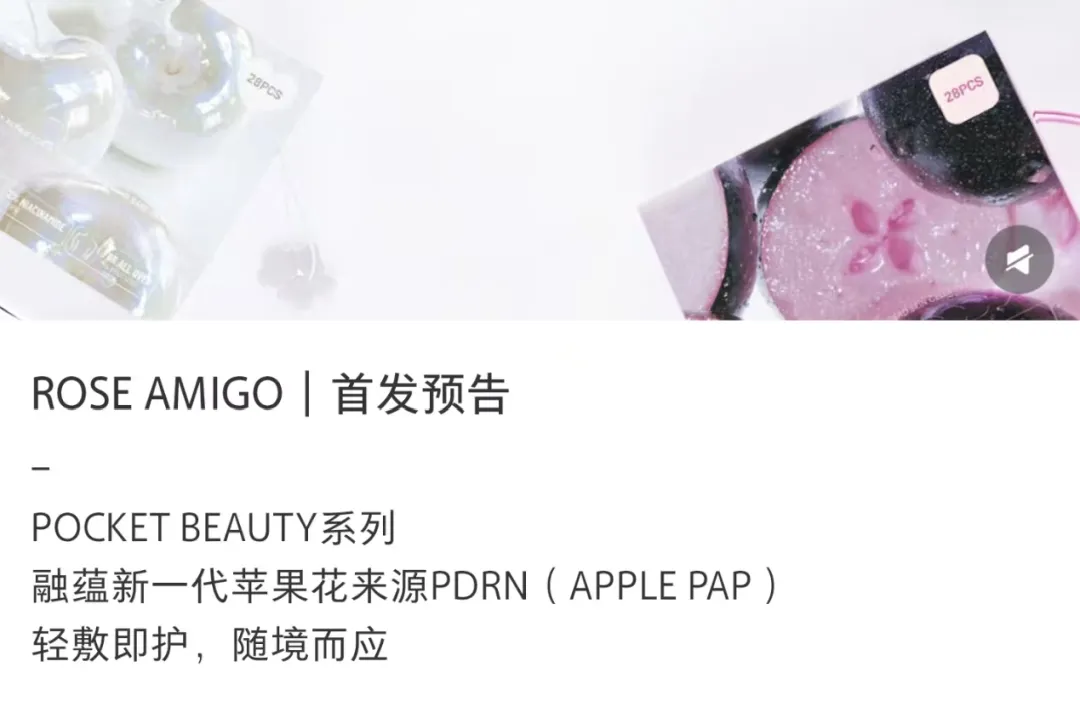
▍ Image source: ROSE AMIGO social media account
It is worth noting that although all 6 products feature apple blossom-derived PDRN (APPLE PAP), their respective efficacies are supported by 6 completely different formulations. PDRN is more like a common label running through the entire series rather than a universal ingredient.
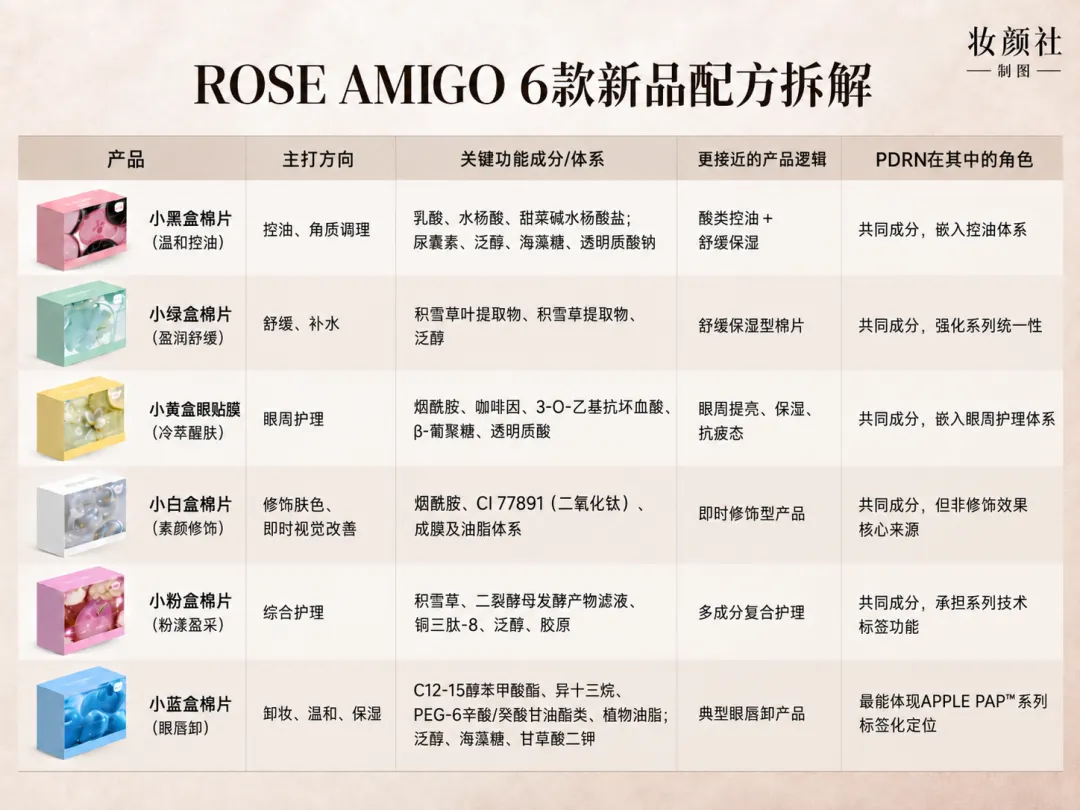
The gentle oil control of the "Little Black Box Cotton Pads" relies on an acid system composed of lactic acid, salicylic acid, and betaine salicylate, with apple PDRN simply added into this system; for the "Little Blue Box Eye and Lip Makeup Remover Cotton Pads," C12-15 alkyl benzoate, isododecane, PEG--6 caprylic/capric glycerides, and plant oils are the main agents for dissolving makeup, while panthenol, trehalose, and dipotassium glycyrrhizate are responsible for improving skin feel after makeup removal. PDRN is not responsible for removing mascara.
And the moisturizing, gentleness, and suitability for sensitive skin claimed by this eye and lip makeup remover come from consumer use tests involving 31 subjects using the complete product continuously for 5 days. This supports the efficacy of the entire product, but it cannot inversely prove that the results are brought about by apple PDRN.
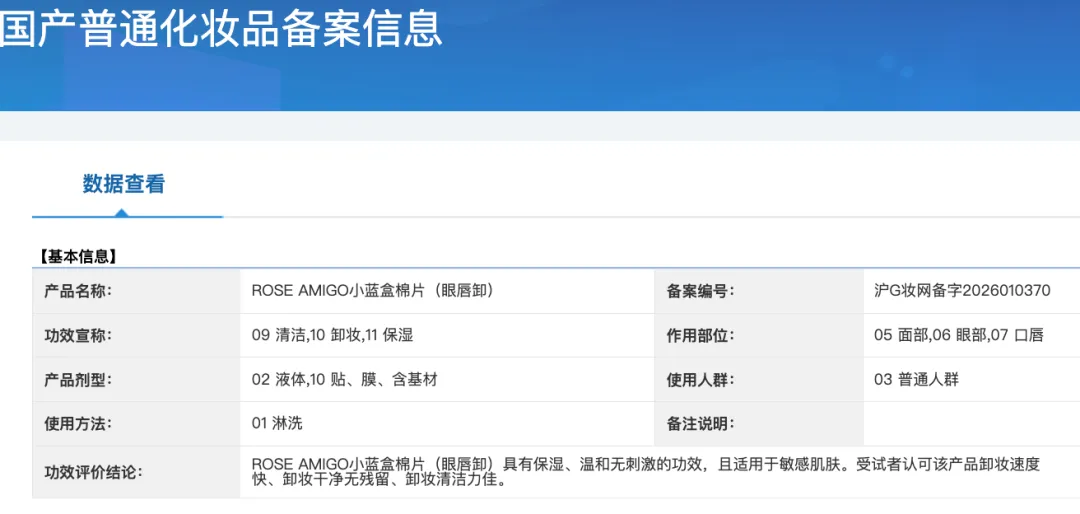
▍ Screenshot from National Medical Products Administration
Compared to essences and creams that require long residence time, eye and lip makeup removers are short-contact products; and as a nucleic acid macromolecule, PDRN inherently faces stratum corneum delivery barriers when used topically. Without data on PDRN deposition, transdermal penetration, or controlled experiments, it is difficult to judge solely based on the ingredient list how much actual efficacy it contributes in such products.
However, if we shift our focus from efficacy to brand strategy, ROSE AMIGO's intention becomes clear.
Although the 6 products have different functions, they share the same ingredient combination: hydrolyzed DNA + apple blossom extract. The brand uniformly names it APPLE PAP and places it at the core position of the initial communication for the POCKET BEAUTY series. The role of PDRN here is no longer just the active ingredient of a single product, but a brand technology label running through the entire series.
Oil control can switch to a different acid system, eye patches can add caffeine, bare-face correction can use titanium dioxide, and makeup removal has its own oil and surfactant systems; the only constant is APPLE PAP.
Even eye and lip makeup removers are starting to include PDRN, indicating that it is no longer an ingredient whose efficacy needs to be explained individually, but is becoming a daily basic configuration running through the series. This is the most noteworthy change in ROSE AMIGO's current entry.

ROSE AMIGO turning PDRN into a series label is just the tip of the iceberg.
Over the past two years, changes in PDRN at the raw material end have been even faster than the expansion of application categories; it long ago ceased to have only salmon as its source. Plant, microalgae, microbial, and even recombinant biological manufacturing routes are emerging simultaneously, and a originally relatively singular nucleic acid raw material is rapidly diverging into completely different technical paths.
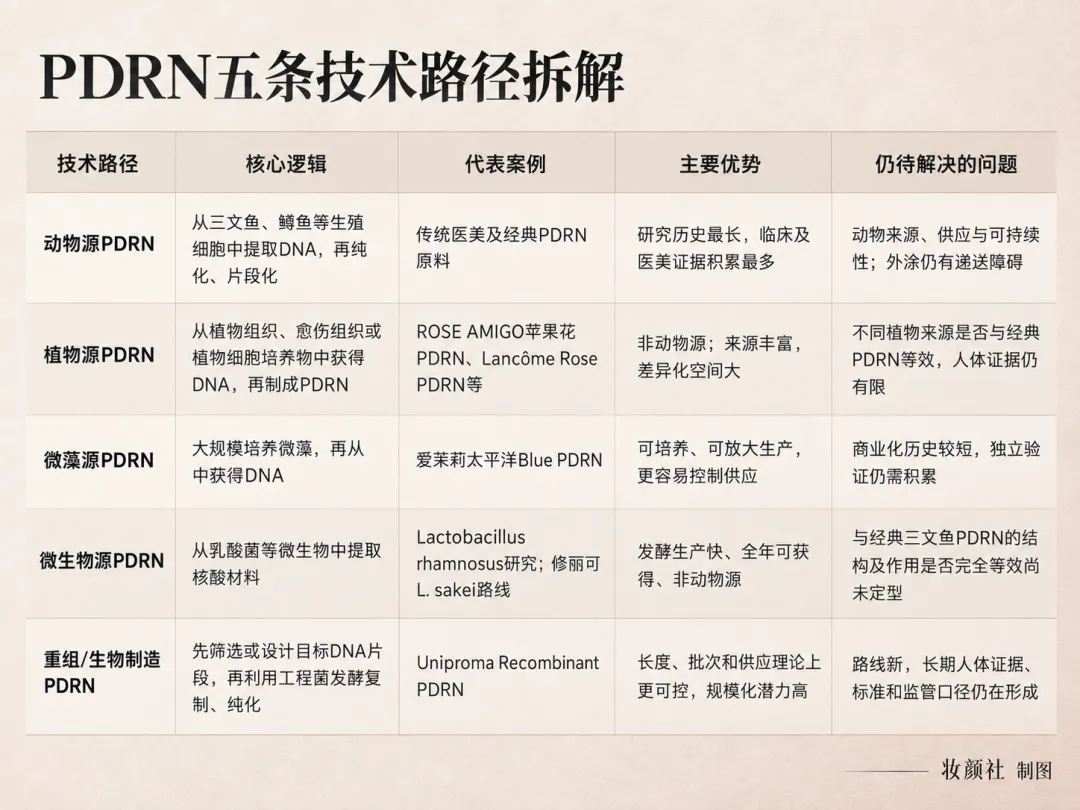
Plant PDRN is the most bustling category in this round of expansion.
A review on plant PN/PDRN published in 2026 shows that related raw materials can now come from callus tissue, adventitious roots, and plant cell culture systems. However, the paper specifically warns that evidence for plant-derived PDRN is still primarily based on preclinical studies, and one cannot directly assume it has clinical equivalence with traditional animal sources simply because it is also composed of DNA fragments.
In other words, "apple PDRN," "rose PDRN," and "ginseng PDRN" sound highly communicable, but the plant name is only the first layer of information. What truly needs to be asked is: from which plant tissue is the DNA obtained? What is the purity? How large are the fragments made? And is there human evidence for the final raw material?
L'Oréal is already moving in a deeper direction. In 2025, a study co-published by Lancôme researchers directly investigated the performance of rose-derived PDRN in human keratinocytes and ex vivo skin, focusing not on the traditional PDRN A2A receptor pathway, but on aging-related indicators such as mitochondrial function, autophagy, oxidative stress, and collagen. Subsequently, Lancôme applied Absolue PDRN™ to its longevity series products.
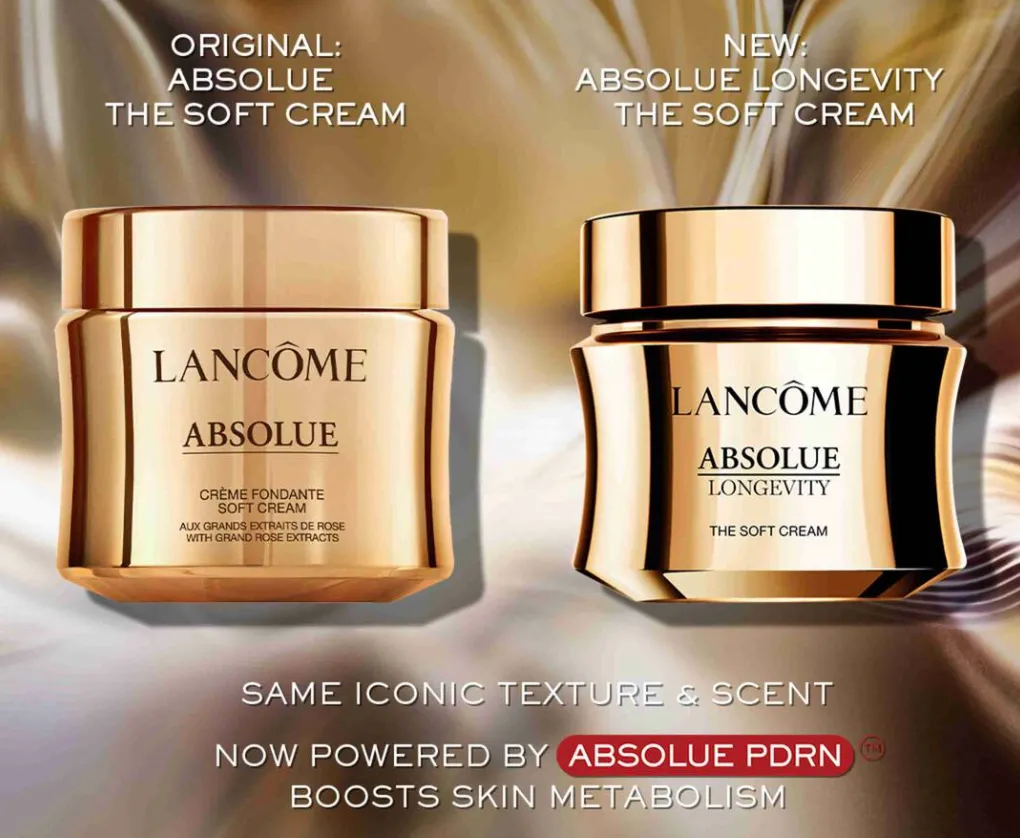
▍ Lancôme Absolue PDRN™ Cream
If plant sources are about "changing the source," the microalgae route begins to solve both the source and industrialization problems simultaneously.
Amorepacific chose Chlorella. The group states that its Blue PDRN not only breaks away from animal ingredients such as salmon, but also establishes a stable production process for high-content, high-purity, low-molecular-weight PDRN.
Related studies show that the single molecule size of its microalgae PDRN is approximately 1/20 of the control salmon PDRN, and verified the A2A receptor-related mechanism.
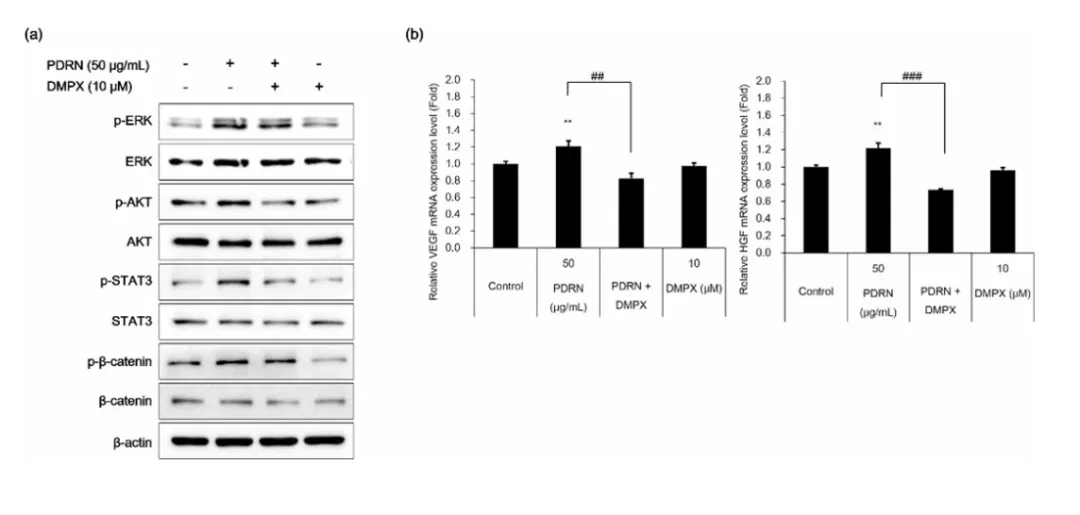
▍ A2A receptor blockade experiment for microalgae PDRN
Going a step further, there are microorganisms.
In 2025, a study systematically reported for the first time on microorganism-derived PDRN obtained from Lactobacillus rhamnosus, with the authors regarding "year-round cultivability and sustainable supply" as a significant advantage over the salmon route.
SkinCeuticals, under the L'Oréal Group, launched its new version of Phyto Corrective PDRN Serum (botanical soothing repair essence, commonly known as "Phyto Corrective") in 8 this year. It directly uses non-animal nucleic acid materials derived from Lactobacillus sakei and emphasizes a 18-step purification process. Notably, the brand officially describes it as "100% DNA+RNA." This indicates that as commercialization accelerates, the boundary of raw materials covered by the term PDRN is rapidly widening.
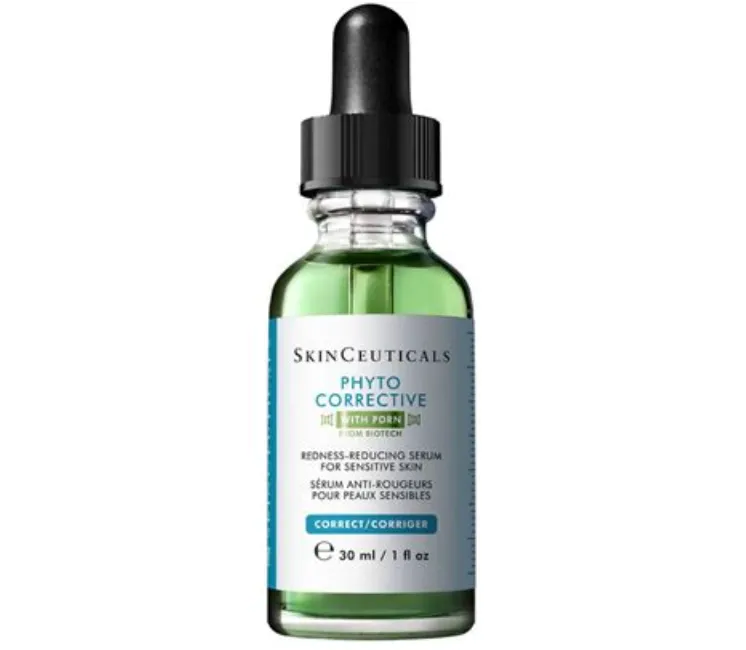
▍ SkinCeuticals Phyto Corrective PDRN Essence
What may truly change the production logic of PDRN is the fifth route—recombinant biological manufacturing.
Its greatest difference from the previous routes lies in the fact that it no longer involves first finding a fish, a plant, or a natural microorganism and then extracting DNA from it. Instead, it involves first designing the target DNA fragment, then constructing plasmids, allowing engineered bacteria to replicate massively through fermentation, followed by capture and purification.
For example, the recombinant PDRN process disclosed by raw material supplier Uniproma is: target sequence screening → plasmid construction → microbial fermentation → target product capture → downstream purification. It even sequenced and compared PDRN/PN products on the market, screening out 99 target gene fragments for subsequent recombinant development.
It is worth noting that this recombinant PDRN and traditional salmon PDRN may ultimately share the same INCI name—Sodium DNA, but the underlying supply chains and production methods are already completely different.
This means that PDRN is undergoing a deeper transformation.
The earliest PDRN was essentially a resource-extraction-type raw material: find suitable biological tissue, obtain large amounts of DNA, and then purify and cut it. The plant cell, microalgae, and microbial routes advanced it into a cultivable-type raw material, no longer fully dependent on natural resources, but obtaining raw materials stably through cell culture or fermentation. At the recombinant PDRN stage, the industry is moving further toward designable raw materials: theoretically, one can control from the source which segment of DNA is replicated, how batch consistency is maintained, and how to achieve scaled industrial production.
Therefore, as PDRN enters the next round of competition, simply highlighting source stories like rose or apple will hardly constitute a barrier. The real contest is shifting from source to specifications, purity, and mass production stability.

For cosmetics, there is an even more realistic hurdle: can these DNA fragments actually penetrate the skin barrier and reach the locations where they might truly exert their effects?
This is an unavoidable threshold when PDRN shifts from medical aesthetics to topical skincare. Injections can deliver PDRN directly into tissues, whereas cosmetics first face the stratum corneum. PDRN is essentially a nucleic acid macromolecule; with its large molecular size, hydrophilicity, and negative charge, it is not naturally suited for passive diffusion through an intact stratum corneum. Consequently, the focus of research on topical PDRN in recent years has shifted from how much is added to how it is delivered.
From public research, the industry is roughly addressing this issue on two levels: first making PDRN easier to deliver, and then designing methods to get it in.
The first level is molecular size control, which refers to the increasingly common low-molecular-weight PDRN. Controlling the length of DNA fragments through ultrasound, enzymatic cleavage, and other methods can reduce the size barrier of traditional long-chain PDRN.
The second level is the delivery system, among which liposomes and other nanolipid carriers are currently receiving considerable attention.
A 2025 study on PDRN nanoliposomes encapsulated PDRN into liposomes with an average particle size of approximately 125 nm, achieving an encapsulation efficiency of 81.3%. In vitro experiments showed that, compared to free PDRN, this liposomal PDRN increased skin permeation over 24 hours by approximately 1.22 times and skin retention by approximately 1.40 times, with better stability and sustained-release effects. In other words, loading PDRN into a lipid vehicle can indeed alter the distribution and residence of macromolecules in the skin.
However, there is a point of confusion here: a small carrier does not mean the PDRN itself is small. The 20 nm claimed by products often refers to the nanocarrier loading the PDRN, not the size of the DNA fragments. Carrier particle size, PDRN molecular weight, encapsulation efficiency, and transdermal depth need to be considered separately.
Amorepacific's Blue PDRN is currently a representative combination strategy on the corporate side.
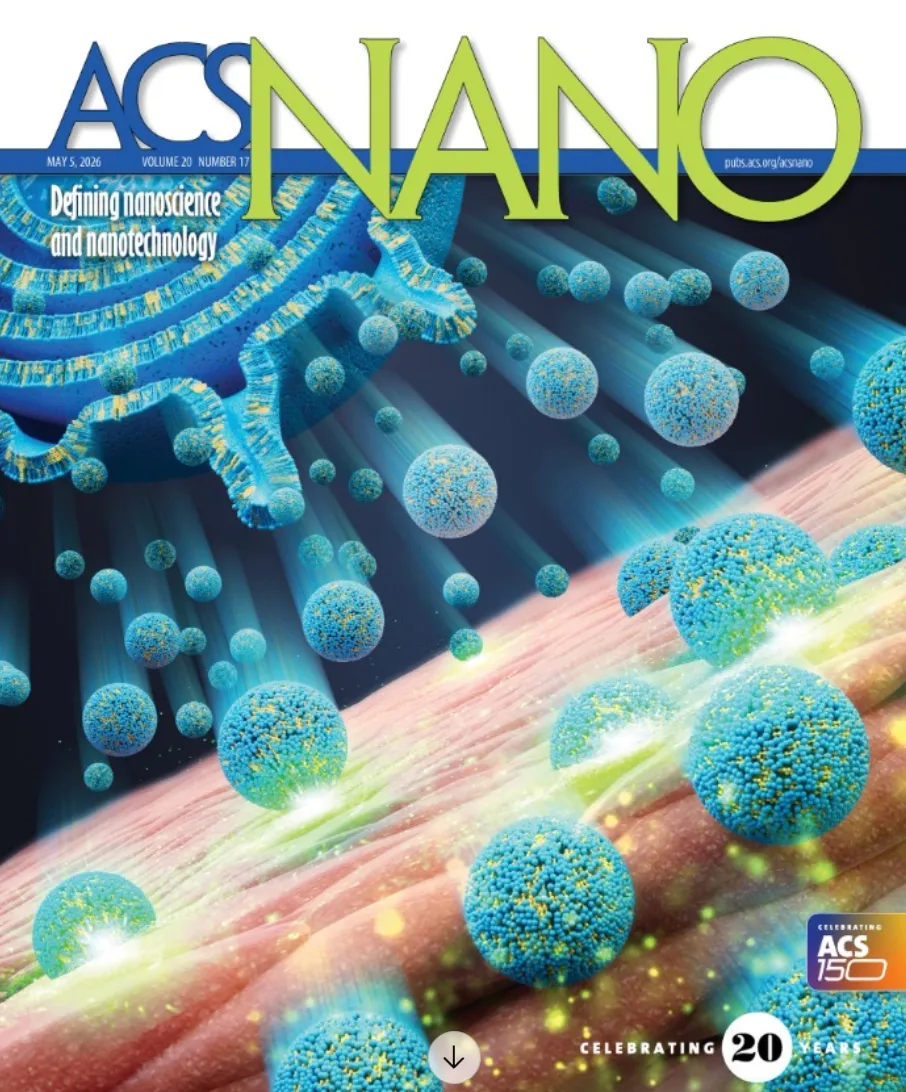
▍ Illustration of Amorepacific Lipo3EX Nano-Delivery Technology
It did not stop at replacing salmon with Chlorella, but instead low-molecularized microalgae-derived PDRN and introduced the Lipo3EX lipid delivery technology developed in collaboration with KAIST. Lipo3EX is a lipid nanocarrier of approximately 20 nm, aiming to balance structural stability with skin delivery.
Subsequently, Blue PDRN was incorporated into the final formula for clinical validation. Amorepacific officially disclosed that after 4 weeks of use, the product achieved improvements in skin barrier and elasticity comparable to dermatological procedures. However, since the formula contains PDRN, hyaluronic acid, and the delivery system simultaneously, these results disclosed by the brand cannot attribute all changes solely to PDRN.
On another front, a PDRN-850K study published this year addresses the academic question of "whether PDRN actually gets in."
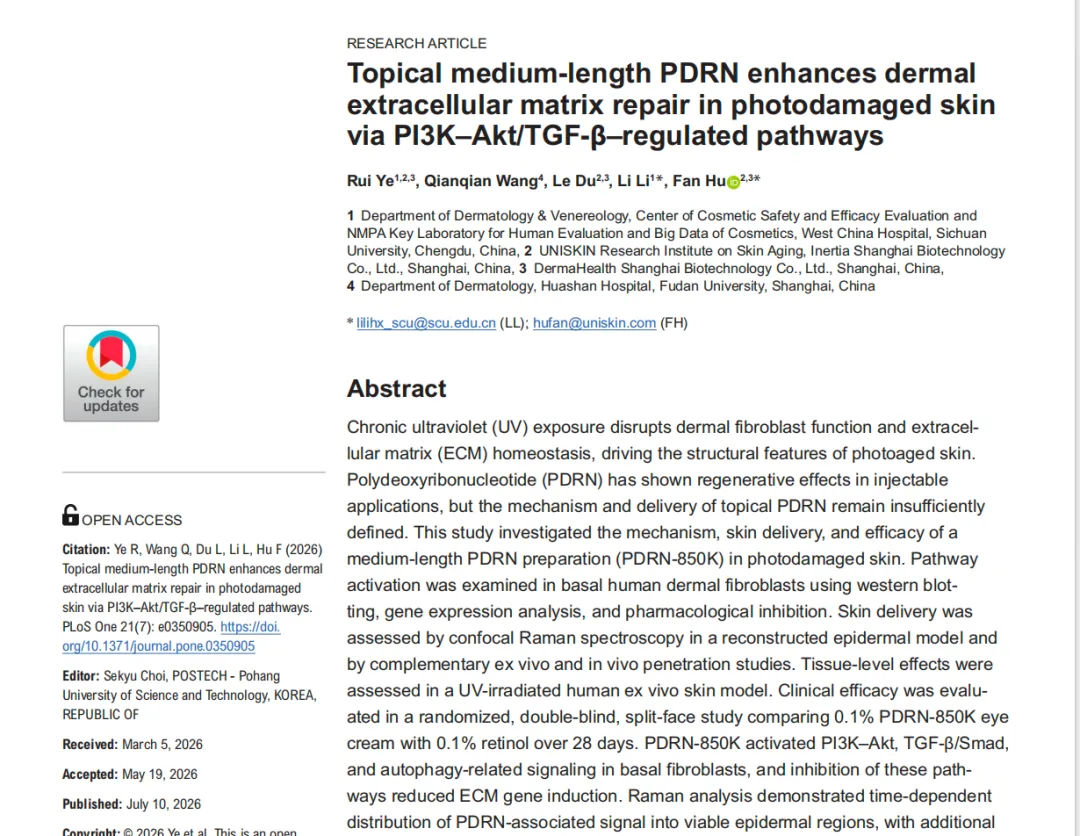
▍ 2026 Topical PDRN-850K Study Published in PLOS ONE
The study first observed in in vitro skin models and ex vivo pig skin that PDRN signals entered the viable epidermis over time and distributed to deeper layers. However, the human penetration experiment involved only 1 volunteer. The researchers cautioned that Raman spectroscopy detected only PDRN-related signals, which cannot prove that intact PDRN entered specific cells, let alone that it reached the dermis in large quantities.
What is truly noteworthy is that this study did not stop at "observing penetration." Researchers further observed signal changes such as PI3K-Akt and TGF-β/Smad in fibroblasts, and finally conducted a randomized, double-blind, split-face trial involving 31 Chinese women, comparing the performance of 0.1% PDRN-850K eye cream versus 0.1% retinol eye cream over 28 consecutive days. It attempts to connect the link in the evidence chain for topical PDRN that has most easily been broken in the past:
Clear PDRN specifications → Detect skin distribution → Verify cellular pathways → Then examine final human efficacy.
But even at this level, the authors did not claim the problem was solved. The sample size for human penetration was extremely small, and Raman detection itself has limitations; more importantly, macromolecule delivery is highly dependent on the final formula, so results obtained from one type of PDRN and one carrier cannot be directly extrapolated to all products labeled as containing PDRN.
This precisely reveals the core of the upcoming competition in topical PDRN.
For a brand that truly wants to build a technological moat, low molecular weight, nano, and liposomes are only the starting point. Truly valuable evidence needs to continue to answer: how large is the PDRN, how large is the carrier, how much is loaded, which layer of the skin it enters, how much actually arrives, and whether it still produces a verifiable biological effect after arrival.
Written at the end
The next round of competition for PDRN will likely not simply stop at whose molecule is smaller.
A smaller molecular weight does not mean it has penetrated; a carrier made to nano-scale does not mean the PDRN itself is also nano-scale; detection of entry into the stratum corneum does not mean it has reached the dermis; an increased transdermal rate does not mean the final efficacy will increase correspondingly.
This also means that the threshold for brand science communication is rising.
In the past, consumers found the three letters PDRN novel; now, brands are beginning to push parameters such as 165K, low molecular weight, liposomes, nano-carriers, and transdermal rate to the forefront. Whoever can translate these complex molecular engineering and delivery technologies into language consumers can understand is becoming a new communication capability. But for the industry, what is more important is whether the evidence behind the parameters can withstand scrutiny.
Returning to ROSE AMIGO. It uses apple flower-derived PDRN as the common label for the entire series, but what APPLE PAP has publicly answered most fully so far is still where the PDRN comes from. As for the specific molecular specifications of hydrolyzed DNA, actual content, whether a specialized delivery system is used, and whether effective delivery in the skin can ultimately be achieved, public information has not yet provided a more complete answer.
And as more and more brands enter the PDRN track, origin can only determine where the story begins; delivery and verification increasingly determine how far this story can ultimately go.