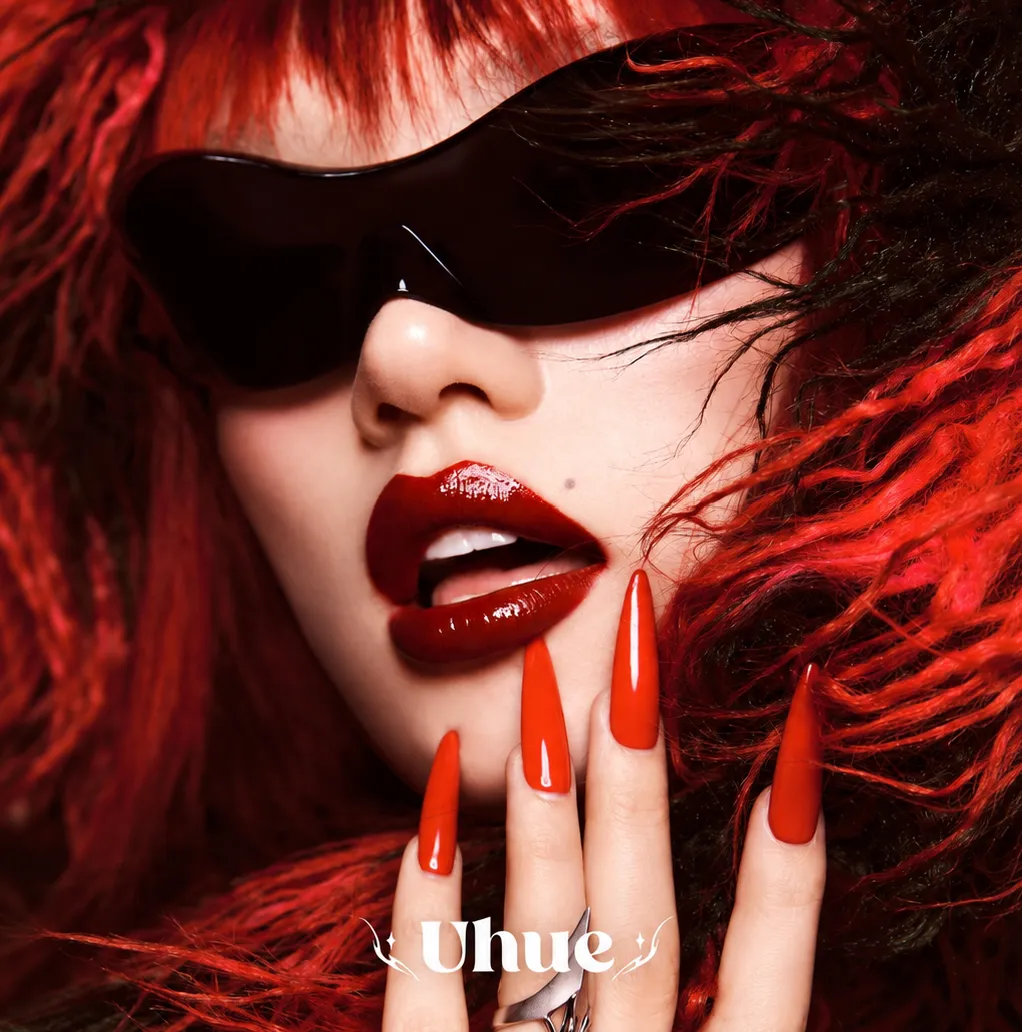
Recently, domestic cosmetics brand UHUE posted a termination notice on its Tmall flagship store, announcing that it will officially cease operations on 9 month 24 day.
After 7 years since its founding, this brand that once attracted young consumers with sweet-cool packaging, mirror lip gloss, and Y3K style is about to reach the end of its domestic business.
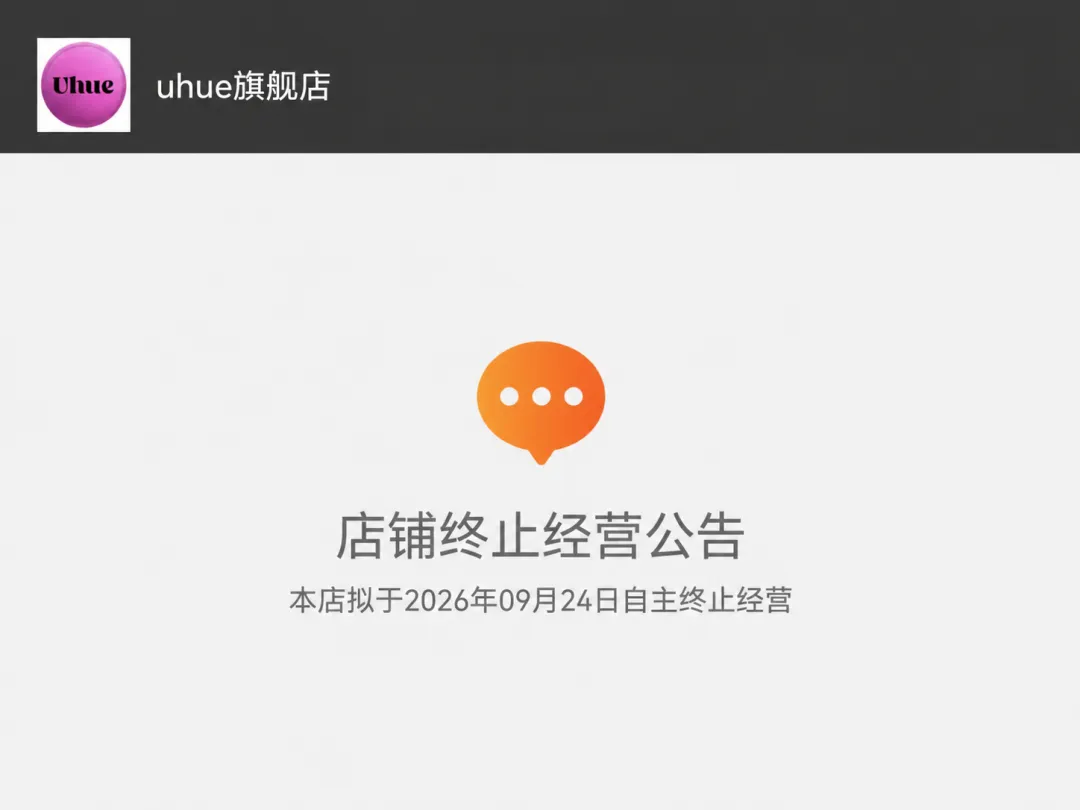
▍Screenshot from UHUE flagship store
But UHUE's exit was not without warning, nor was it because it had long been forgotten. Public filing information shows that in 2025 year 12 month, it still had new products filed; since 2026 year, new product filing records have dropped to zero. More than half a year later, the flagship store posted a termination notice.
From continuous new launches to the halt of domestic business, what exactly did UHUE go through?

UHUE was founded in 2019 year, with its affiliated company being Zhejiang Huacan Trading Co., Ltd., positioned as "girls' individualistic aesthetics," with products covering lip gloss, eyeshadow, blush, and more. Young women, individual expression, and packaging design constituted the distinctive labels of this emerging domestic cosmetics brand.
Looking at its product iterations, one can see the connection between the brand and popular makeup trends. In 2022 year, UHUE launched the "Floating Paradise" mirror water-light lip gloss, entering the then-popular cool-toned makeup look with low-saturation colors and glossy texture; in 2023 year, the "Flower Field" series, with orange-brown tones and mirror finish, appeared in Japanese fashion media FASHIONSNAP's trend observation of "Maillard makeup."
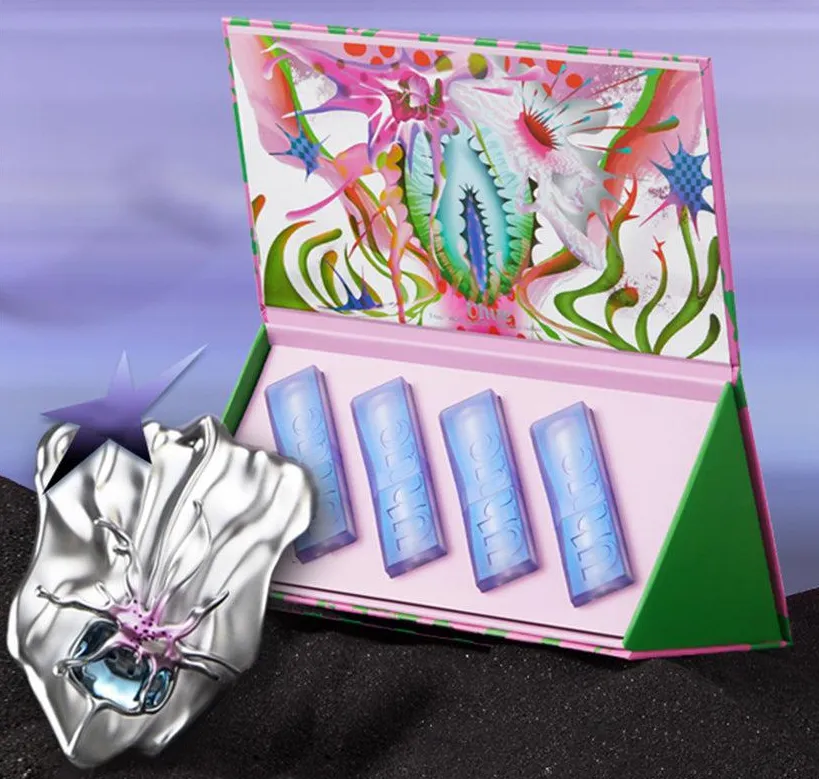
▍Uhne Flower Field series
From color to texture to series themes, UHUE continuously translated popular aesthetics into concrete products. The subsequent "Home Court" series further strengthened the presence of packaging: blue, translucent tones, and upward-flowing lines were used by the brand to express futurism and self-growth. Design not only served to attract attention but also became a vehicle for UHUE to convey its brand philosophy.
Over the years, it accumulated a certain level of attention. In 1 month of this year, UHUE's Tmall flagship store had 31.3 ten thousand followers. This brand was not never seen by consumers.
Until a year before closing, UHUE was still continuously filing products. According to YAN BEAUTY REVIEW's compilation, from 2023 year to 2025 year, UHUE had 58, 49, and 40 product filings respectively.
But entering 2026 year, UHUE became embroiled in controversy over the design it had always emphasized. In 1 month, the bottle bodies and gift box peripherals of the "Home Court" and "In the Spotlight" series were questioned by some consumers for sexual innuendo and objectification of women. The brand responded that the design was inspired by elements such as water flow, flames, and hearts, emphasized that the core team is composed of women, accepted rational criticism, but opposed unfounded accusations. Subsequently, the "Home Court" series was removed from the Tmall flagship store.
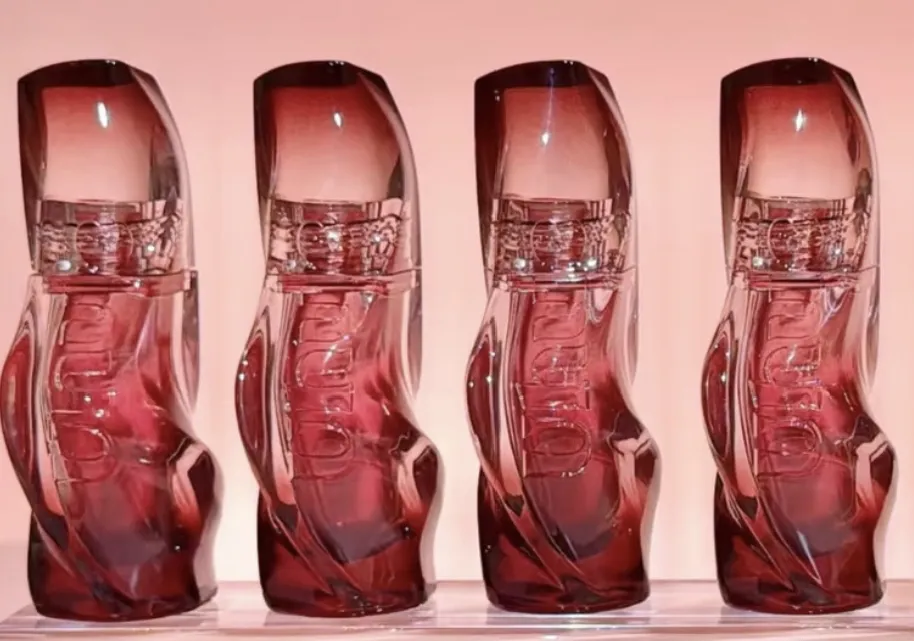
▍Uhne controversial product image
What followed were changes in filings and store operations. In 2025 year 12 month, UHUE still had 6 product filings. Entering 2026 year, as of 9 month 18 day, no new filings were seen. In 9 month of the same year, the flagship store posted a termination notice.
From continuous filings, to zero filings, to store closure, it took less than a year.
It is worth mentioning that before this, UHUE had also attempted to extend its business overseas.
In 2025 year 3 month, Japanese agent mimi-Japan announced the launch of the "Tipsy" series of lip and cheek dual-use products, with a total of 4 shades, arranged for sale in some Don Quijote stores and online channels such as Amazon. In 9 month of the same year, The Colorist opened a store in Aeon Mall Binh Duong, Vietnam, and the mall's published list of brands in stock included UHUE.
Overseas trademark layout continued into 2026 year. Trademark database Justia shows that on 3 month 5 day, Zhejiang Huacan Trading Co., Ltd. submitted a U.S. trademark application for UHUE, covering categories such as lipstick, eyeshadow, mascara, and blush.
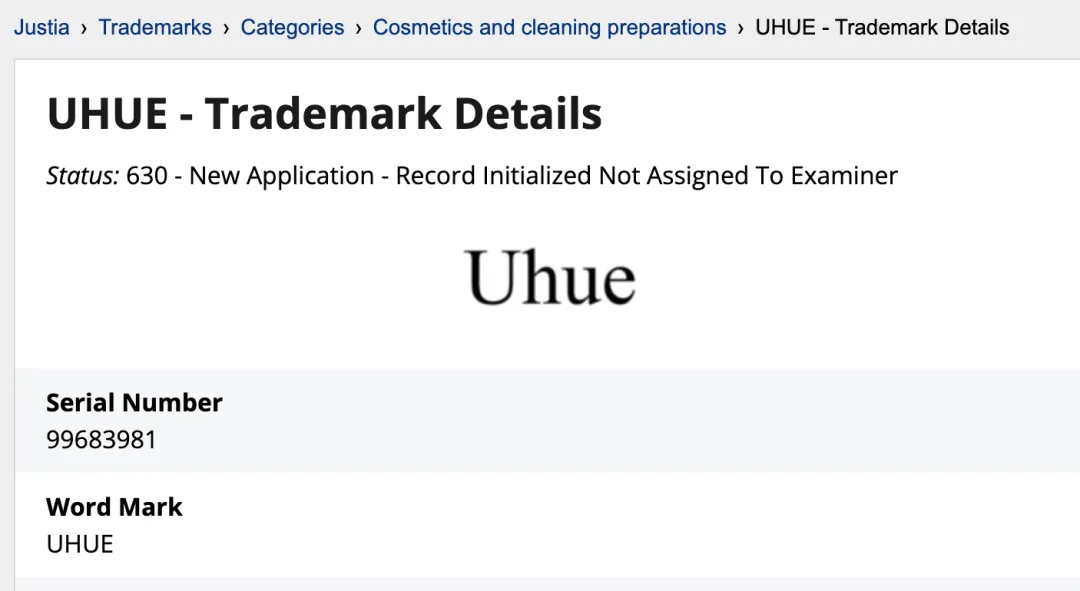
▍UHUE U.S. trademark application information
But these moves were not large in scale. Japan relied on agents, Vietnam relied on multi-brand stores, and the U.S. has only submitted one trademark application so far. UHUE did not truly establish its own team and channels in any overseas market.
For a brand that has not even been able to give domestic consumers a stable reason to buy, changing markets may not solve the original problem.

Attributing UHUE's store closure entirely to a packaging controversy would overlook a problem that existed even earlier: the selling points it used to attract consumers were always in intense competition.
● Trends are not UHUE's exclusive business.
In 2022 year, when UHUE entered low-saturation lip makeup with "Floating Paradise," INTO YOU was also adding low-saturation pink and brown shades to its lip glosses. In 2023 year, when UHUE's "Flower Field" series chased the Maillard makeup trend, Original Color Wave also launched lip products with nude colors, water-gloss finish, and stylized packaging. In both trend reports, UHUE appeared alongside other domestic brands in similar product directions.
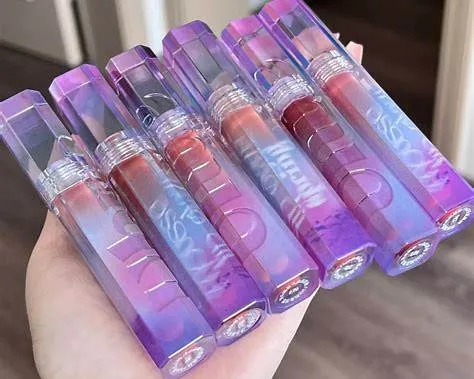
▍UHUE "Floating Paradise" series
This shows that UHUE caught the trends but did not exclusively own the demand they generated. When consumers want low-saturation lip colors or mirror finishes, they can choose among multiple brands; a new series that hits the seasonal aesthetic does not mean the next season's purchases will stay with the same brand.
Chasing trends can help a brand enter consumers' consideration set, but it is difficult to become a reason to exclude other brands on its own. For UHUE, the challenge is not whether it can launch another series that fits the trend, but when similar shades, textures, and packaging appear on the market at the same time, what else can make consumers prioritize it.
● Competitors in the same track are also expanding their business scale.
According to the 2025 year performance disclosed by Juyi Group, Judydoll's global retail sales exceeded 30 hundred million yuan, a year-on-year increase of over 18%; Joocyee's lip products global sales exceeded 1800 ten thousand units.
More notably, Juyi's operational capabilities already cover its own R&D, factories, e-commerce operations, retail stores, and marketing. Consumers still see a lipstick or an eyeshadow palette, but competition among brands has extended to the entire operational system behind the products.
When competitors can both continuously launch new products and sell them at scale, relying solely on a new series is no longer enough to build a competitive barrier.
● The design continued, but consensus was not reached.
UHUE is not entirely without attempts to continue product design. "Dang Hong" is an extension of the "Home Court" packaging, changing to a red and black color scheme on the original shape and giving it a new holiday theme. This detail shows that it does not just constantly replace unrelated shells, but also tries to transform existing designs into brand symbols that can be used repeatedly.
The problem is that this continued symbol later became the focus of controversy. For UHUE, positioned as "girls' individualistic aesthetics," packaging is not just a tool to attract attention, but also carries the task of expressing female attitudes and brand philosophy. When some consumers believe these designs are offensive, the controversy no longer stays at "whether it looks good," but touches on whether the values expressed by the brand are recognized.
UHUE emphasized creative inspiration and a female team in its response, but the identity and original intention of the creators cannot directly eliminate consumers' different feelings about the finished product. The two sides are actually not discussing the same issue: the brand is explaining "why it is designed this way," while the questioners are expressing "why I do not accept it."
From this perspective, what UHUE needs to deal with is not just a single packaging design mistake: on the product side, there are many alternative choices for similar makeup effects and aesthetics; on the business side, continuous new launches require sales and profit support; on the brand side, individual expression must gain recognition from target consumers.
These pressures may not be the direct cause of store closures, but they point to a clear business challenge: UHUE needs to turn "worth a glance" into "worth repeated purchases," and make each purchase leave enough profit to support the next round of operations. Design can help it complete the first step, but cannot complete all the rest alone.
Written at the end
UHUE's story is actually not complicated. It is seen through visuals, remembered through new launches, and discussed through trends. But when visuals can be copied, new launches can be caught up with, and trends can be replaced, it needs to answer a more basic question: why do consumers buy UHUE instead of another equally good-looking brand?
UHUE did not answer this question before closing its stores.
Domestic store closures, zero product registrations, design controversies, and unsuccessful overseas expansion—these are not four independent events, but four manifestations of the same problem: the brand never transformed "being seen" into "being needed."
Aesthetics is an entry ticket, not a moat. Novelty is traffic, not a brand.
UHUE is not without effort. It strives to launch new products, strives to go overseas, and strives to express itself through design. But the direction of its efforts has always been to let more people see it, rather than to give those who have already seen it a reason that it is irreplaceable.
This is also a problem that all domestic beauty brands that rise on aesthetics need to face: when a brand's core competitiveness is "good-looking," then when something better-looking appears, or when "good-looking" itself has problems, what is left?