
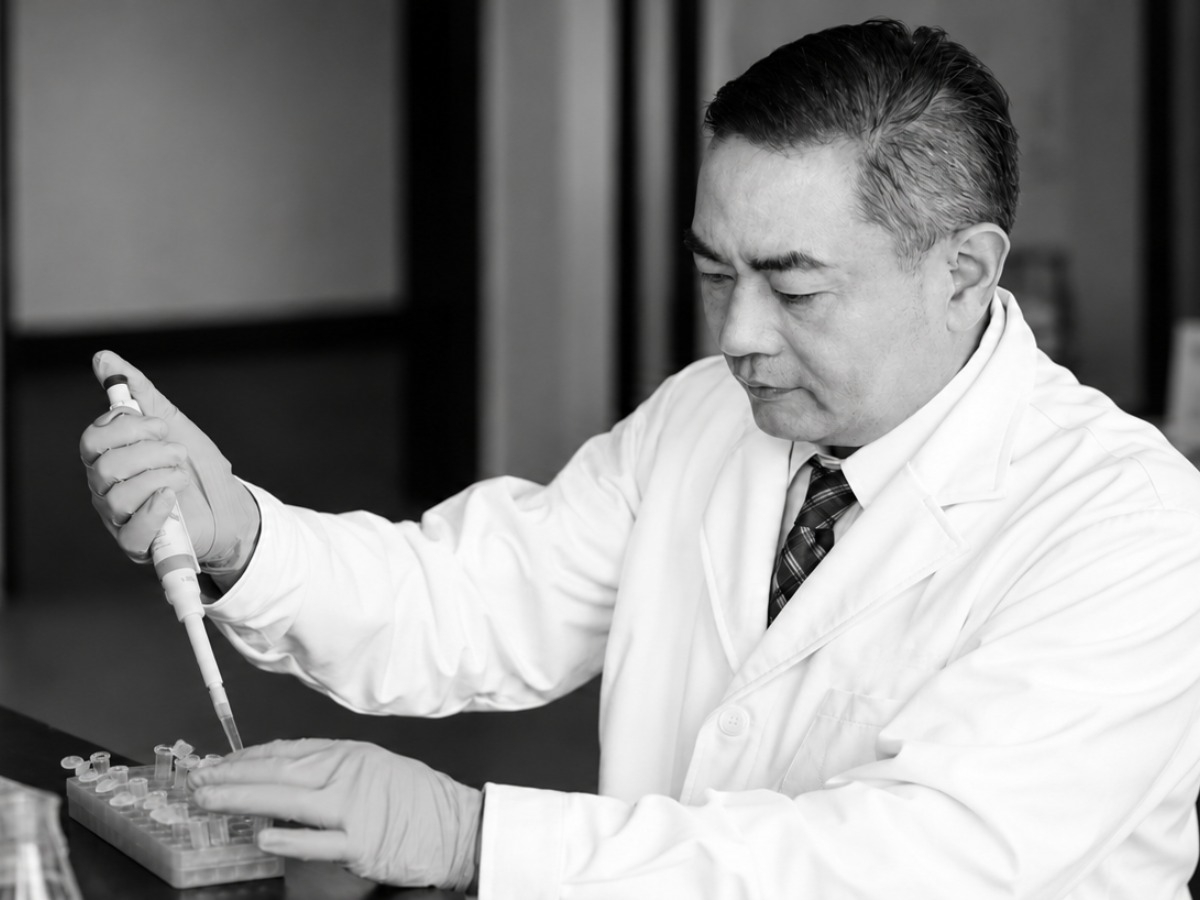
On 10 month 13 day, sad news came from China's hyaluronic acid industry.
Bloomage Biotech issued an obituary announcing that Guo Xueping, former deputy general manager and chief scientist of the company and chairman of Bloomage Tang'an, passed away due to illness at the age of 61.
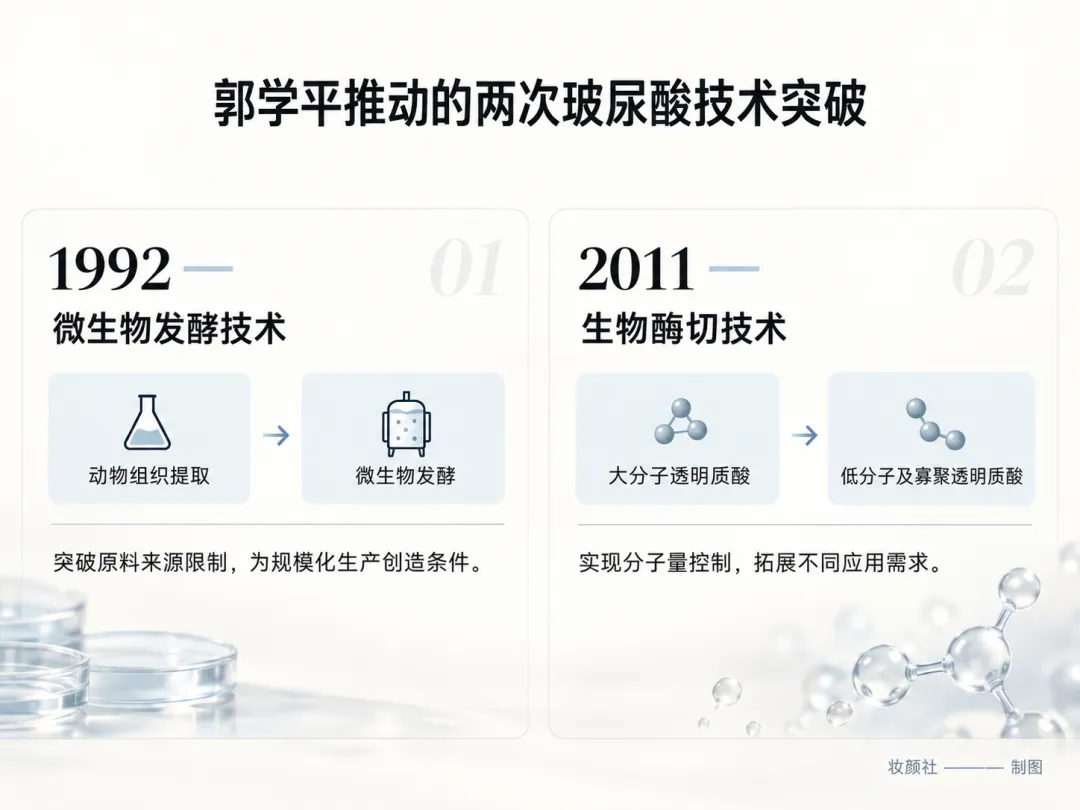
For China's beauty industry, Guo Xueping is a name that cannot be bypassed. In the 90s of the last century, he and his research team were the first in China to break through the technical challenge of producing hyaluronic acid by microbial fermentation, promoting the shift of China's hyaluronic acid production from traditional animal tissue extraction to microbial fermentation. Subsequently, he also participated in promoting the industrialization of technologies such as enzymatic cleavage, laying an important foundation for the development of China's hyaluronic acid industry.
But what is little known is thatthis scientist who changed the development path of China's hyaluronic acid industry did not stop his scientific research after retirement.
In early 2025, Guo Xueping, who had retired from Bloomage Biotech, still led his team as chairman of Bloomage Tang'an to advance another technical breakthrough—synthesizing heparin through in vitro enzymatic methods, attempting to change the traditional heparin production's dependence on animal raw materials.
From hyaluronic acid to synthetic heparin, Guo Xueping's scientific research career spanned nearly 40 years. What he left behind is not only the hyaluronic acid technology that has achieved large-scale production, but also a synthetic heparin research that is still being industrialized.

In 1992, in a laboratory in Jinan, Shandong, Guo Xueping and his team finally got the long-awaited result.
Through the glass fermentation tank, they saw the fermentation broth gradually becoming viscous. This meant that after repeated screening and testing, the team had finally found a microbial strain capable of producing hyaluronic acid.
This breakthrough became an important turning point in the history of China's hyaluronic acid industry.
Before this, domestic production of hyaluronic acid mainly relied on extraction from animal tissues such as rooster combs, which not only limited raw material sources but also involved complex extraction processes and high production costs. Guo Xueping once recalled that the price of imported high-purity pharmaceutical-grade hyaluronic acid raw materials in China at that time once reached as high as 100 ten thousand yuan per kilogram.
To truly achieve large-scale production of hyaluronic acid, the problems of cost and yield must first be solved.
In 1984, after graduating from Shandong Medical University, Guo Xueping studied for a master's degree under the tutelage of Chinese biochemical pharmacologist Zhang Tianmin. Subsequently, he joined the research team led by Ling Peixue and began exploring the technical route of producing hyaluronic acid by microbial fermentation. After years of research, in 1992, the team completed the small-scale test research on producing hyaluronic acid by microbial fermentation; in 1993, the related pilot-scale project was included in the national 'Eighth Five-Year' scientific and technological breakthrough plan.
In 1998, Guo Xueping participated in the establishment of Shandong Freda Biochemical Co., Ltd., further promoting the industrialization of this technology. In 2000, Bloomage International invested in and became the controlling shareholder of the company, which gradually developed into today's Bloomage Biotech.
But Guo Xueping's scientific breakthroughs did not stop there. In 2011, he led his team to achieve large-scale production of low-molecular-weight and oligomeric hyaluronic acid using biological enzymatic cleavage technology.
Simply put, this technology can use biological enzymes to degrade high-molecular-weight hyaluronic acid into smaller molecules and better control the molecular weight of the product, thereby meeting the raw material needs of different application scenarios.
If 'microbial fermentation' solved the problem of how to mass-produce hyaluronic acid, then 'enzymatic cleavage technology' further solved the problem of how to produce hyaluronic acid of different molecular weights.
In 2019, the invention patent related to the preparation of oligomeric hyaluronate by enzymatic cleavage, in which Guo Xueping and others participated, won the China Patent Gold Award.
These two technological achievements not only became an important technical foundation for the development of Bloomage Biotech, but also created conditions for China's hyaluronic acid industry to expand production scale and application fields.
After promoting the industrialization of hyaluronic acid, Guo Xueping turned his attention to another bioactive substance that has long relied on animal tissue extraction—heparin.

In 2025 month 1, Bloomage Biotech issued an announcement, announcing that Guo Xueping, having reached the statutory retirement age, would no longer serve as deputy general manager of the company and would no longer be recognized as a core technical personnel.
However, retirement did not mean the end of Guo Xueping's scientific research career. In fact, as early as 2023, he participated in promoting the development of another biotech company—Bloomage Tang'an. This company, incubated by Bloomage Biotech, aimed its research direction at the biosynthesis of heparin.
Heparin and hyaluronic acid belong to the glycosaminoglycan family, but their application fields differ. Hyaluronic acid is widely used in medicine, medical devices, and cosmetics, while heparin is an important anticoagulant drug mainly used in medical scenarios such as thrombosis prevention and surgical anticoagulation.
More notably,the heparin industry has long faced a problem similar to that of the early hyaluronic acid industry: high dependence on animal raw materials.
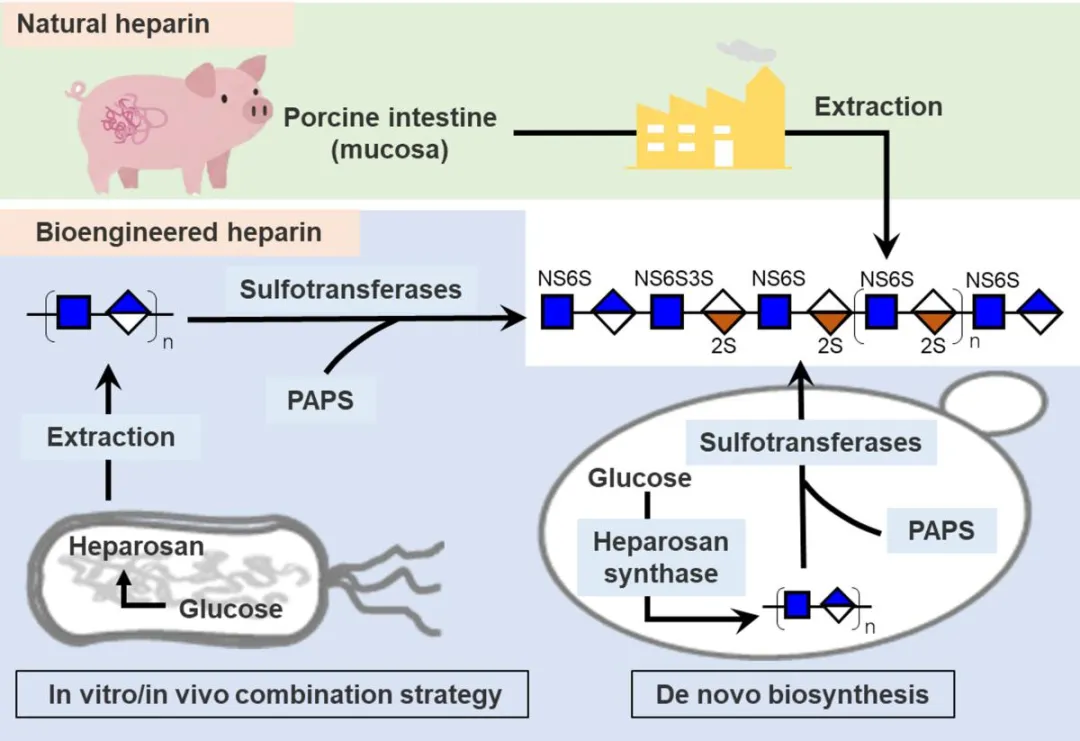
Currently, traditional heparin is mainly extracted from porcine intestinal mucosa. This production method not only depends on animal raw material supply, but also, due to the complex molecular structure and heterogeneity of heparin, places high demands on raw material quality and production process control.
Guo Xueping hoped to change this production method.
In 2025 month 3, in an interview with the pharmaceutical media of Process Industry, Guo Xueping introduced that Bloomage Tang'an is researching the synthesis of heparin using in vitro enzymatic methods, constructing sugar chains with specific structures and anticoagulant activity in vitro through the action of multiple enzymes.
Unlike traditional animal extraction methods, this technical route attempts to directly synthesize target molecules, thereby reducing dependence on animal tissues and improving the controllability of product structure.
At that time, Guo Xueping revealed that the team had successfully synthesized a pentasaccharide structure with anticoagulant activity and, in cooperation with Shandong University, had advanced the related technology from the laboratory to the pilot-scale stage.
But for Guo Xueping, the real challenge remains how to get the technology out of the laboratory. In this interview, he specifically talked about the difficulties of industrializing synthetic biology: technical feasibility does not necessarily mean commercial competitiveness. Production costs, scale-up capabilities, and market demand for the final product also determine whether scientific research results can be implemented.
Subsequently, the industrialization process of Bloomage Tang'an continued to advance. In 2025 month 7, Bloomage Tang'an settled in Guangming, Shenzhen, and held an angel round financing signing ceremony. In 2026 month 4, Bloomage Biotech's chairman Zhao Yan disclosed in an interview with Xinhua Finance that Bloomage Tang'an had achieved kilogram-level annual production capacity for heparin polysaccharides through biosynthesis and was advancing domestic and international Class I new drug applications.
From pilot-scale to kilogram-level production, this means that the research has made further progress in process scale-up.
However,Being able to synthesize heparin at scale and ultimately obtaining drug marketing approval are still two different things. The latter also requires completing corresponding pharmaceutical research, safety and efficacy evaluation, and passing regulatory approval. As of now, public information has not shown that the relevant innovative drug of this project has been approved for marketing.
Unfortunately, Guo Xueping did not live to see this research complete the entire process from technological achievement to marketed drug. Compared with hyaluronic acid, which has already established a mature industrial system, synthetic heparin still has a long way to go. And who will continue to advance this research that he promoted during his lifetime has also become a question worthy of attention.

The passing of Guo Xueping also leaves a practical question: who will continue the synthetic heparin project he promoted during his lifetime?
From public information, this research has already established a relatively complete scientific research team. The official website of Huaxi Tang'an shows that in addition to Guo Xueping serving as chairman and general manager, doctoral supervisor Sheng Juzheng of Shandong University serves as the company's chief technology officer, and distinguished professor Wang Fengshan of Shandong University serves as senior advisor for new drug development. The company has also established an industry-university-research cooperation relationship with Shandong University.
It is worth noting that just in 6 month of this year, this scientific research force also achieved a new research result. On 6 month 18 day, Shandong University released news that the team of professors Wang Fengshan and Sheng Juzheng made new progress in the fully enzymatic synthesis of non-animal-derived heparin polysaccharides, and the related research was published in the international academic journal Trends in Biotechnology.
▍Non-animal-derived heparin research results
The research team not only achieved controllable synthesis of non-animal-derived heparin polysaccharides, but also conducted pharmacokinetic evaluation in animals. The research results show that the prepared bioengineered heparin is similar to existing clinical drugs in some pharmacokinetic parameters.
This means that the related research has moved from simply solving how to synthesize heparin to further verifying its in vivo performance. Of course, animal experimental results do not mean that the related products already have clinical application conditions.
At the same time, Huaxi Biotech and Huaxi Tang'an still maintain equity and business connections. According to the related party transaction announcement disclosed by Huaxi Biotech in 2026 year 2 month, the listed company indirectly holds approximately 33% of the equity of Huaxi Tang'an. Huaxi Tang'an is also one of the associated enterprises listed in its 2026 year semi-annual report.
However, Guo Xueping served as both chairman and general manager of Huaxi Tang'an during his lifetime. How management responsibilities will be handed over after his death and whether research and development projects will be adjusted, as of press time, no specific arrangements have been publicly disclosed by the company.
For this team, the most important thing next is whether they can continue to advance the existing scientific research results to the drug development and industrialization stage.
From breaking through microbial fermentation production of hyaluronic acid in 1992 year, to continuing to explore non-animal-derived heparin synthesis after retirement, Guo Xueping has always been trying to solve the same problem: how to truly turn laboratory research results into products that can be produced at scale and serve actual needs.
He has witnessed the entire process of China's hyaluronic acid industry from technological breakthrough to large-scale production. This time, he was unable to see the synthetic heparin research reach the end. The unfinished cause will be handed over to successors to continue.