Shangmei Group has taken another step forward in its PDRN strategy.
On 9 month 21 day, PharmaResearch, the parent company of Rejuran and a South Korean regenerative medicine enterprise, announced that it had signed a strategic cooperation memorandum with Shangmei Group. The two parties will cooperate around the Rejuran (REJURAN COSMETICS) cosmetics line in the Chinese market and plan to establish a joint venture.
It is worth noting that PharmaResearch's growth has been almost synchronous with the rise of PDRN/PN in the South Korean medical aesthetics market. Its medical aesthetics product matrix is already mature, and related technologies have extended to the Rejuran cosmetics line.
At the same time, Shangmei has also accelerated its bets on PDRN in the past two years, with brands such as Kans and Ju Guang Bai already incorporating this ingredient into their product lines.
So, since Shangmei can already produce PDRN products itself, why does it still want to establish a joint venture with a South Korean company that has built brand recognition through PDRN/PN?

PharmaResearch is a South Korean regenerative medicine enterprise that has laid out medical devices, pharmaceuticals, and cosmetics businesses around DNA-related technologies, with Rejuran being its representative brand. Rejuran Cosmetics is the first skincare brand in South Korea centered on PDRN, and its PDRN originates from technological accumulation in the medical aesthetics line.
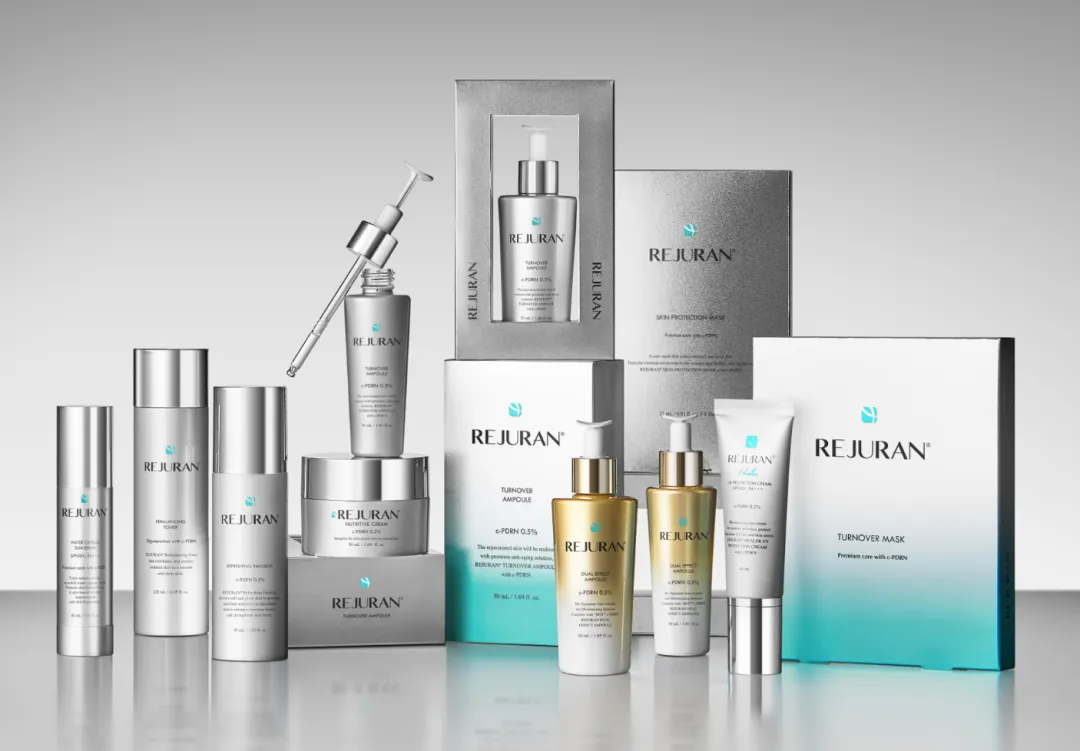
▍Rejuran Cosmetics Matrix Diagram (Partial)
In the cosmetics line, it converts patented DOT technology into cosmetic-grade raw material DOT c-PDRN, thereby building the product system of Rejuran Cosmetics, and positions itself as a high-end efficacy skincare brand based on regenerative medicine technology.
And in this cooperation, what Shangmei is taking over is precisely the Rejuran cosmetics line.
In its official press release, PharmaResearch defined this cooperation as "the landing and localization of Rejuran Cosmetics in the Chinese market." The two parties are no longer staying in the finished product supply mode of production in South Korea and sales in China, but are extending to localized product development and Rejuran Cosmetics brand business, and plan to establish a joint venture. The joint venture equity, business boundaries, and roles of both parties have not yet been announced and are expected to be determined within the year.

▍Source: PharmaResearch Official Website
If these plans are implemented, Shangmei may lead the localized operation of Rejuran Cosmetics in China, including product development and channel implementation.
Currently, Rejuran Cosmetics already has a preliminary retail foundation in China. In 1 month this year, the brand made its online debut on Sephora China, and starting from 3 month, it entered approximately 200 Sephora stores nationwide, becoming the first Korean cosmetics brand introduced by Sephora China's The Next Big Thing project, with the first batch of products covering ampoules, creams, and masks.
But in the past few years, Rejuran Cosmetics has always followed an import model of production in South Korea and sales in China. What Shangmei is likely to do this time is to advance this line towards localized operations in China.
In fact, PharmaResearch is accelerating the global expansion of Rejuran Cosmetics. In 3 month this year, the brand entered Sephora USA's online channels and was distributed in approximately 380 stores, subsequently expanding to markets such as Amazon and Canada. In 6 month, PharmaResearch decided to acquire CG USA, a US cosmetics OEM/ODM enterprise, shifting from the South Korean export finished product model to local R&D, production, and supply.
China is the next stop in its global localization strategy, but the approach is different: buying factories in the US, choosing Shangmei in China.

Shangmei is not a bystander in the PDRN track.
Since the beginning of this year, PDRN has entered a period of intensive new product launches by leading domestic beauty companies. A special report on PDRN released by Shenwan Hongyuan in 6 month mentioned that Shangmei's Kans and Ju Guang Bai have launched PDRN water-light sticks, special care single-dose packs, and Ju Guang Bai collagen salmon water-light single-dose essence. Proya, Marubi, and Botanee are also accelerating their layout.
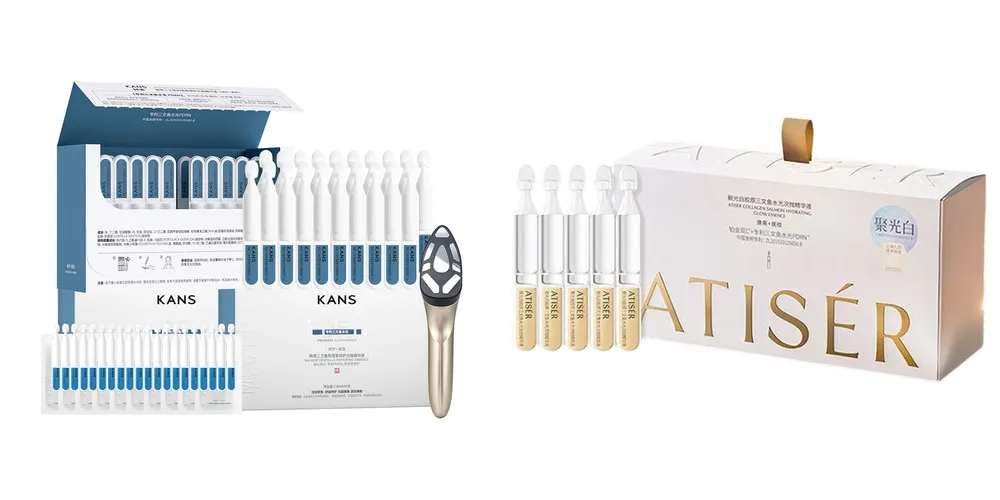
▍Kans PDRN Collagen Stick (Left); Ju Guang Bai Salmon Water-Light Single-Dose Pack (Right)
The PDRN track is becoming increasingly crowded. As more and more brands are able to launch PDRN essences, masks, or single-dose packs, the differentiation brought by containing PDRN itself is shrinking. What truly creates distance is where the PDRN comes from, how it is prepared, whether there is unique technology, and whether the brand can build stable consumer perception around this technology.
Rejuran's advantage lies precisely here.
For brands entering later, PDRN is a raw material that can be purchased and combined into formulas; for Rejuran, PDRN is already highly bound to the brand. Consumers' recognition of Rejuran has largely been established through its medical aesthetics products. This medical aesthetics endorsement is difficult to replicate in a short time by launching a few new products.
Shangmei's willingness to take over localization clearly indicates that medical aesthetics perception and brand momentum are important considerations. PharmaResearch mentioned in its official announcement that Shangmei possesses capabilities in product R&D, brand building, and sales operations, and one of the purposes of the cooperation is to leverage these capabilities to accelerate the commercialization of Rejuran Cosmetics in China.
▍PharmaResearch R&D Site Photo
PharmaResearch also emphasized that the core issue that needs to be addressed in the next stage of Rejuran's global expansion is rapid response to local markets and the establishment of localized production and supply chain systems.
The two parties thus form a complementarity. PharmaResearch provides PDRN technology, the Rejuran brand, and the established medical aesthetics perception; Shangmei provides capabilities in product development, brand operations, supply chain, and channel commercialization in the Chinese market. The latter is what Shangmei has been best at in the past few years. As of 2025, Shangmei's revenue reached 91.78 hundred million yuan, of which Kans' revenue exceeded 73.6 hundred million yuan; the company's official website shows that Kans has ranked first in Douyin beauty for three consecutive years.
Therefore, this cooperation meets the needs of both parties. Rejuran needs a local partner who can translate PDRN technological advantages into products and business in the Chinese market; what Shangmei needs is not a hot ingredient, but a brand that has already occupied the PDRN mindshare.
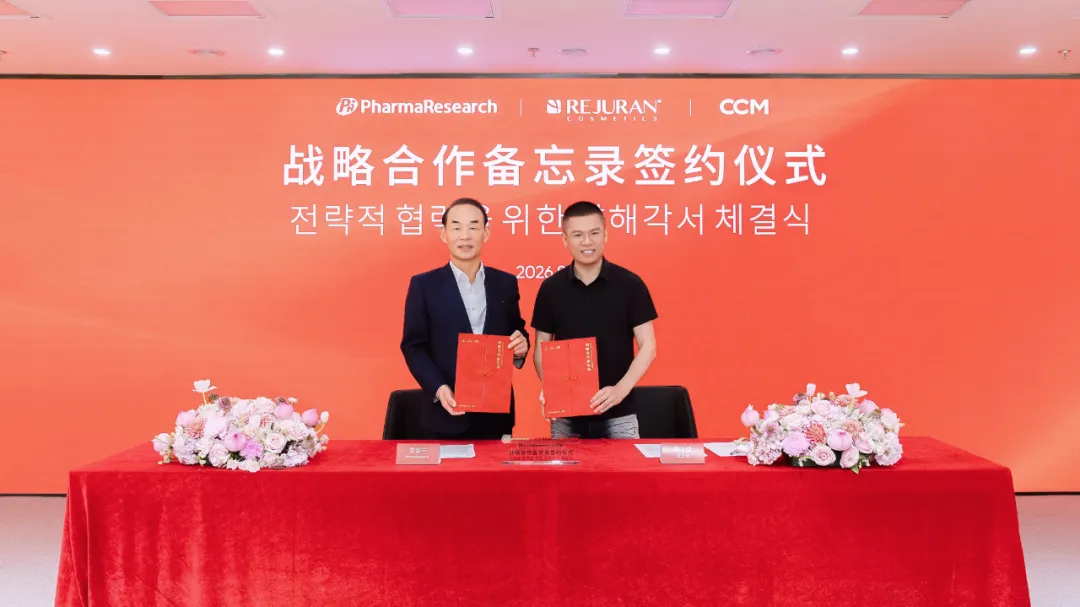
▍Source: Shangmei Group Official Account
If the two parties ultimately proceed in the direction currently disclosed, what Shangmei gains will not just be the opportunity to sell Rejuran, but potentially deeper participation in product definition, brand building, and local operations of a mature overseas technology-based brand in China.
This matter has gone beyond PDRN itself.

Looking back over a month, Rejuran is not an isolated case.
In 8 of this year, Shangmei has already taken over AHAVA's China business through a joint venture. Shanghai Qingdao, a wholly-owned subsidiary under Shangmei, established a joint venture with companies in the Fosun system and the Israeli skincare brand AHAVA. Shanghai Qingdao holds a 70% stake and is responsible for the production, sales, and operations of AHAVA in the Chinese market. The brand assets still belong to AHAVA, but operational control has been handed over to Shangmei.
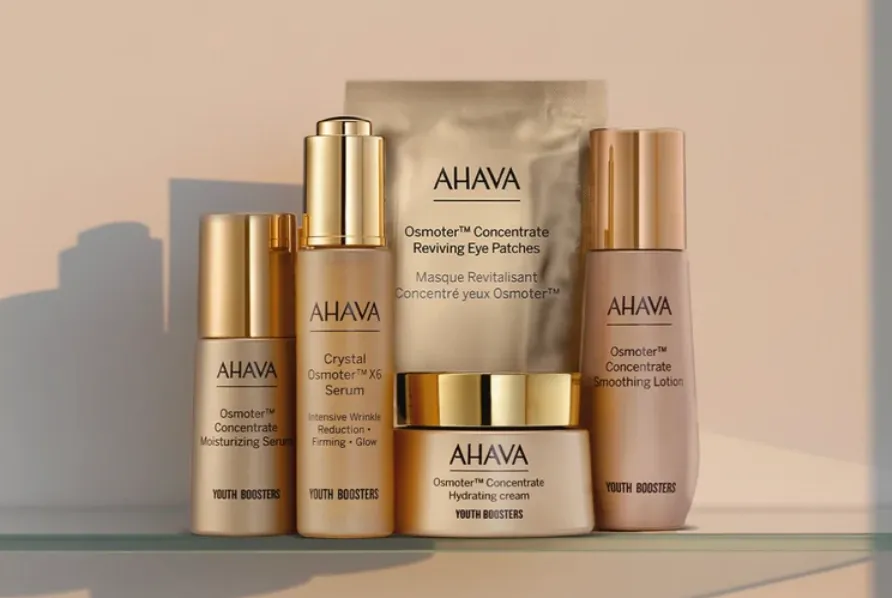
▍AHAVA product matrix (partial)
From AHAVA to Rejuran, Shangmei is attempting to integrate the China businesses of overseas brands into its own system through joint ventures and deep operations, thereby mastering operational control in the Chinese market.
This aligns with the change in positioning that Shangmei has given itself in recent years. Shangmei's official website no longer simply describes itself as a multi-brand cosmetics group, but explicitly states its ambition to become an "investment-driven cosmetics brand management company."
In the past, Shangmei was most familiar with internal incubation. Brands such as Kans, One Leaf, Red Elephant, newpage Yiye, and Anminyou basically grew from product development to channels and marketing within the group. This approach offers strong control, but it takes time for a new brand to go from 0 to achieving mature recognition.
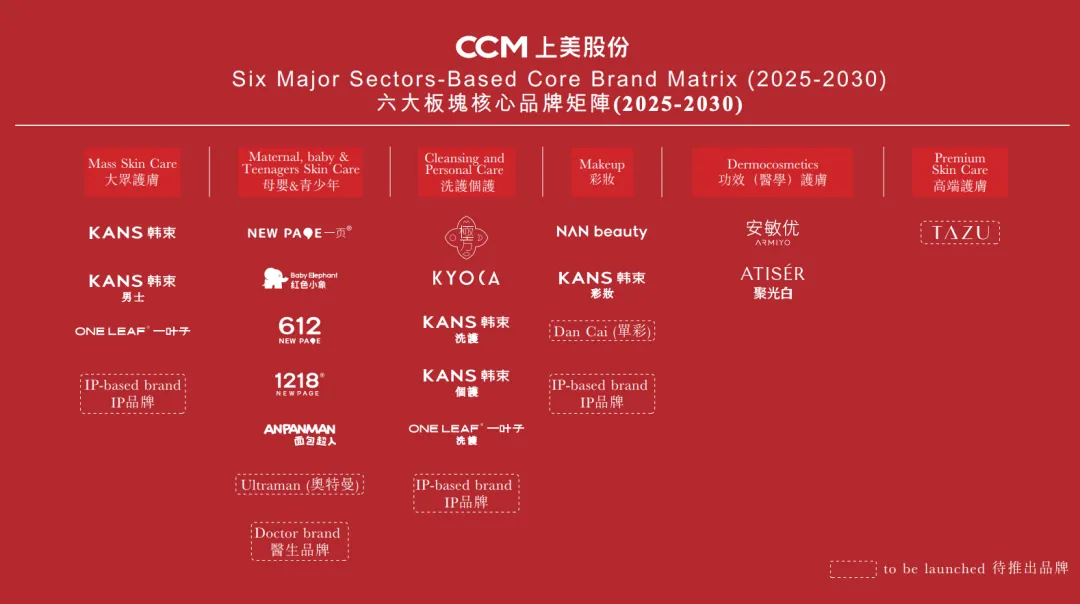
▍Source: Shangmei Co., Ltd. 2025 Interim Report
AHAVA and Rejuran represent another path. Shangmei is looking for brands that come with scarce assets. AHAVA has Dead Sea resources and a long-standing brand story, while behind Rejuran lies PharmaResearch's regenerative medicine technology and PDRN/PN recognition. Such assets cannot be built internally in a short period, but can be accessed through joint ventures and operational cooperation.
For a brand management company, finding brands with non-replicable assets is more important than simply increasing the number of brands. If all brands within the group rely on self-incubation from scratch, growth will inevitably be constrained by its own R&D, teams, and time; by investing, forming joint ventures, and conducting local operations to integrate externally mature technologies and brand assets into its own channels and supply chain, the speed of brand matrix expansion may be redefined.
Shangmei has already demonstrated this intention this year. In addition to AHAVA, the company is advancing multiple new brand projects and has listed "multi-brand" and "globalization" as important strategic directions for the next stage; in 2026, its Indonesian production base also started construction, planned to undertake localized production functions in Southeast Asia.
Thus, it can be seen that Shangmei is validating a new expansion model: brand assets it does not own can be connected through capital; technologies and brand mindshare it lacks can be obtained through cooperation; and what ultimately determines whether these assets can be amplified in China remains Shangmei's most familiar strengths in products, marketing, channels, and supply chain.
If this model proves successful, Shangmei's so-called "brand management company" will truly transform from a positioning into a replicable business model.