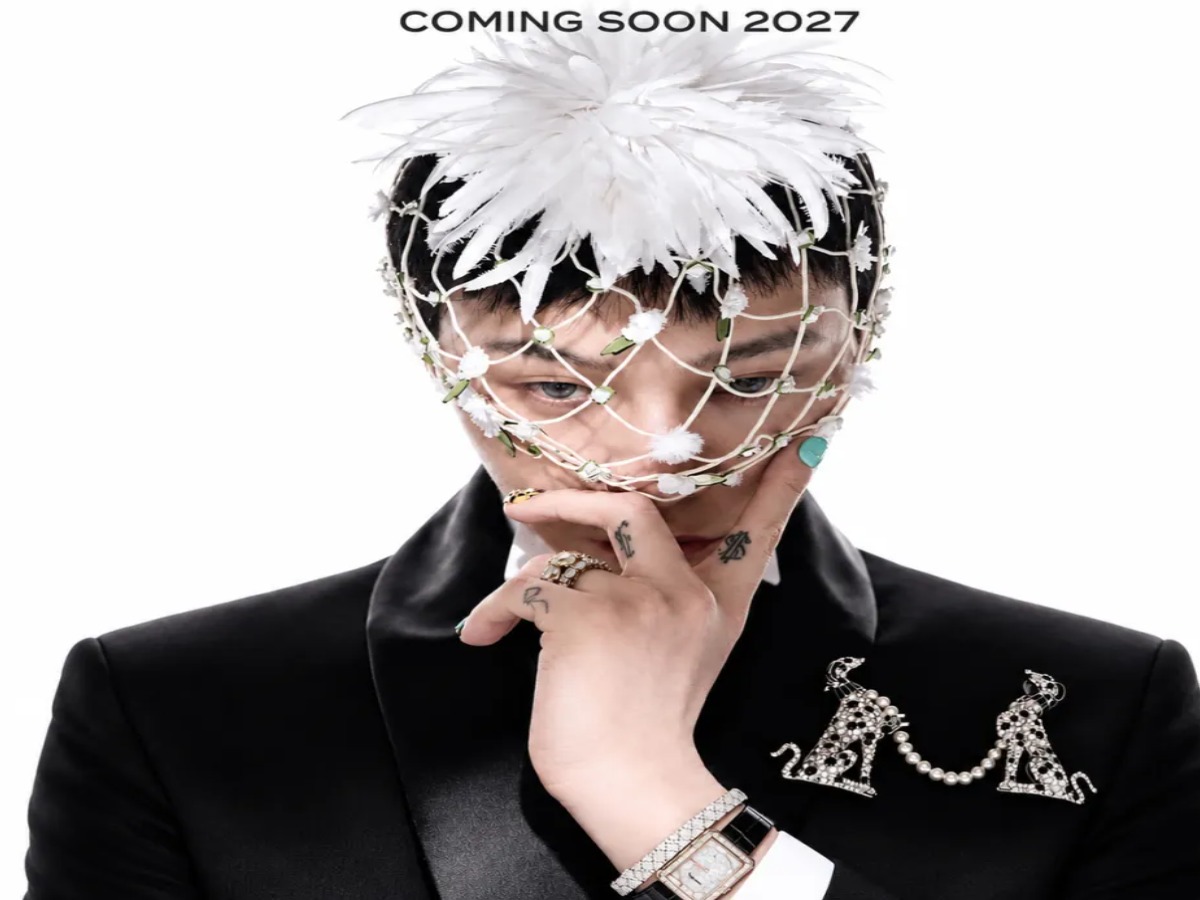
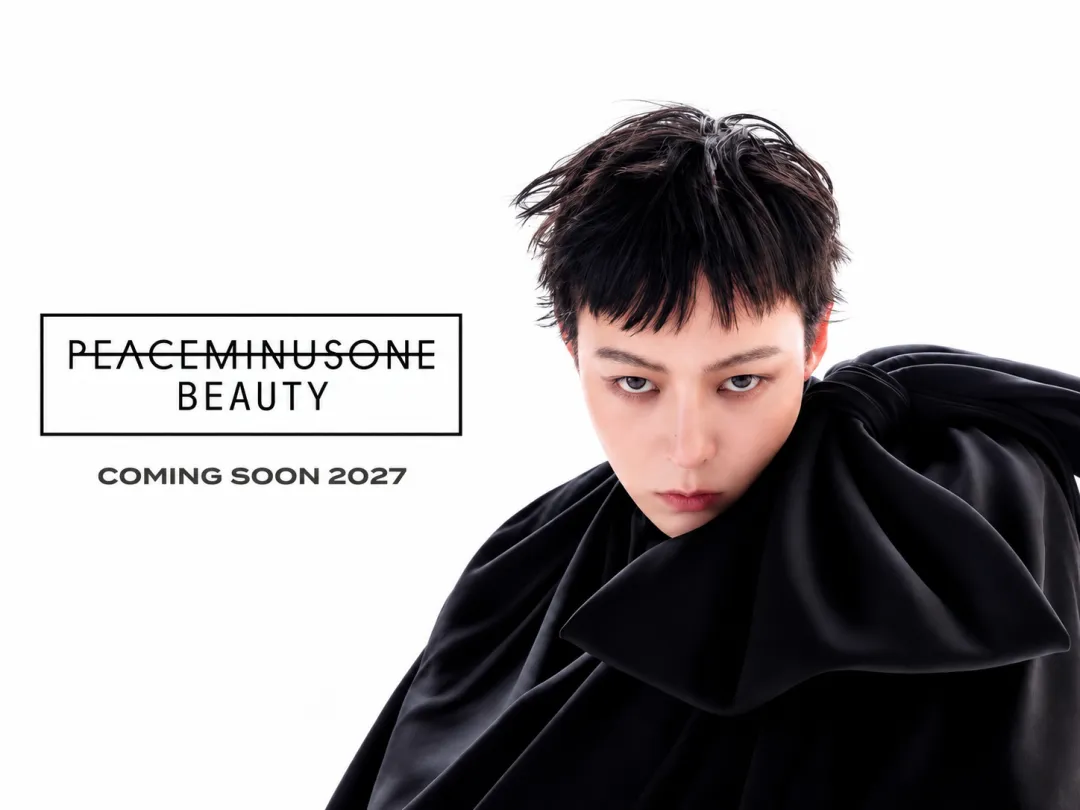
10 month 8 day, Korean beauty group GOODAI GLOBAL announced,will jointly launch a new beauty brand PEACEMINUSONE BEAUTY with the fashion brand PEACEMINUSONE founded by G-Dragon, expected to be officially launched in the first half of 2027 year. Both parties will jointly participate in brand concept planning and product development, and plan to start from the Korean market and gradually enter overseas markets such as the United States and Japan.
G-Dragon has found a powerful Korean beauty group this time. GOODAI GLOBAL owns a number of well-known brands such as Beauty of Joseon, TIRTIR, SKIN1004, Round Lab, and its revenue in 2025 year reached 1.47 trillion Korean won (approximately RMB 74 hundred million yuan). Over the past few years, this group has grown rapidly through intensive acquisitions and has become a force that cannot be ignored in the Korean beauty industry.
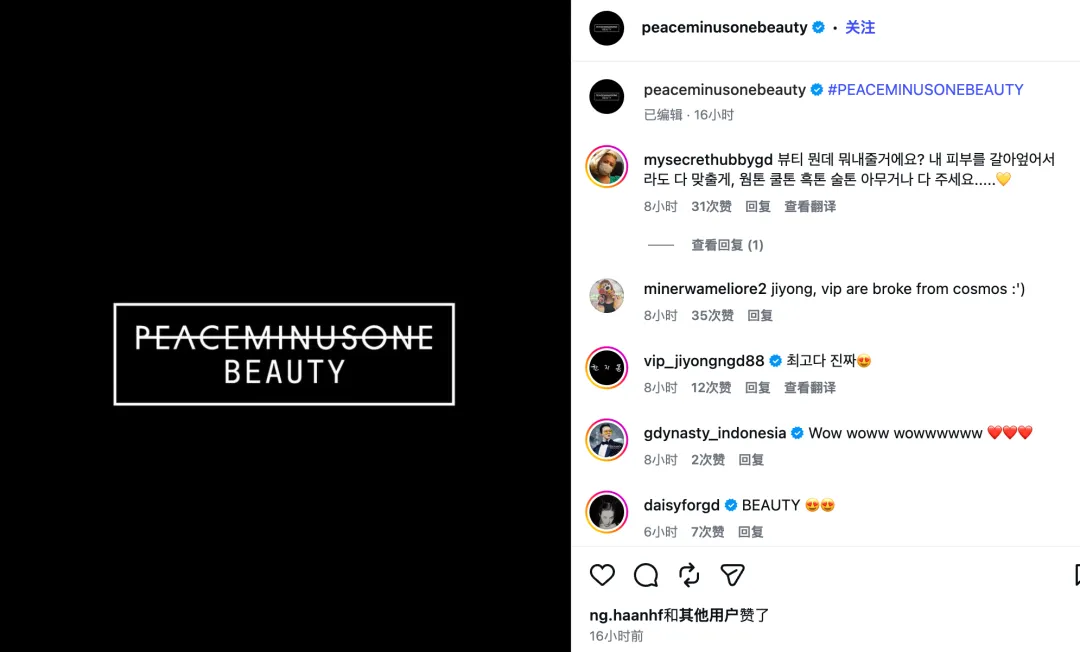
▍Image source: PEACEMINUSONE BEAUTY official announcement image
Now, GOODAI GLOBAL is beginning to try incubating new brands with celebrity IP in addition to acquiring mature brands. G-Dragon brings global awareness and a mature fashion brand system, while GOODAI GLOBAL provides supply chain, brand operations, and overseas channel resources. For this company known for mergers and acquisitions, this cooperation is not just a celebrity collaboration, but also a test of another expansion approach: as it acquires more and more brands, can it incubate a new brand from scratch?

G-Dragon's entry into beauty actually already has a fairly mature brand foundation.
In 2016 year, G-Dragon founded his personal fashion brand PEACEMINUSONE. With its iconic missing-petal daisy pattern and G-Dragon's own fashion influence, this brand has gradually extended from clothing and accessories to multiple consumer fields. The most representative collaboration is the Para-noise series of sneakers launched with Nike in 2019 year. This collaborative shoe with the daisy logo attracted widespread attention in the global streetwear market, and the two parties have since launched multiple collaborative products.
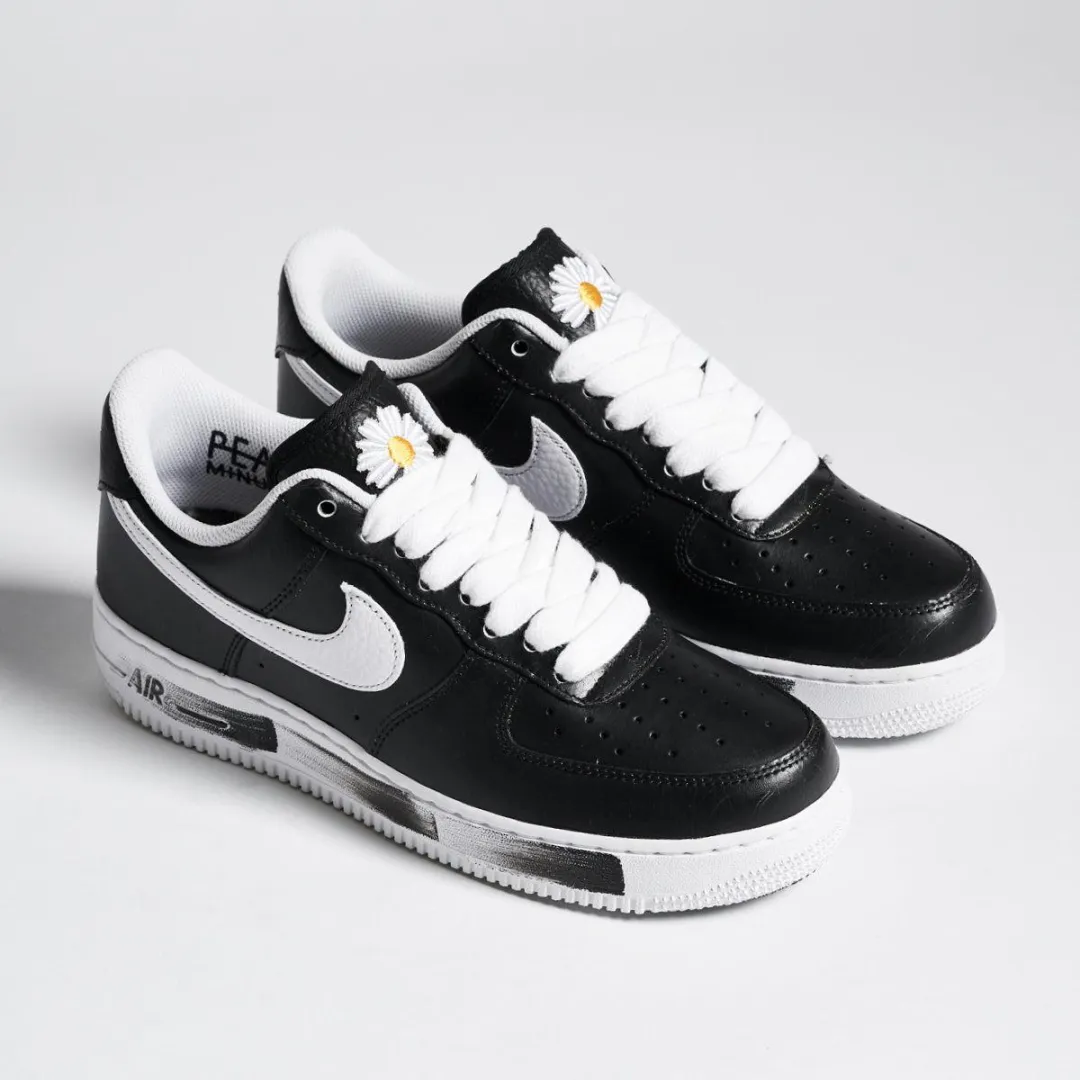
▍PEACEMINUSONE and Nike launched collaborative shoes
The commercial value of PEACEMINUSONE has also been continuously verified through cross-industry collaborations.
Just this year on 9 month 28 day, PEACEMINUSONE and McDonald's launched three limited-edition collaborative products in Korea, including a retro cap, a shoulder bag, and a badge set. On the day of release, some McDonald's stores in Korea saw consumers queuing to buy. Among them, the retro cap originally priced at 1.2 ten thousand Korean won (approximately RMB 60 yuan) was once speculated to 5 times its original price in the second-hand trading market.
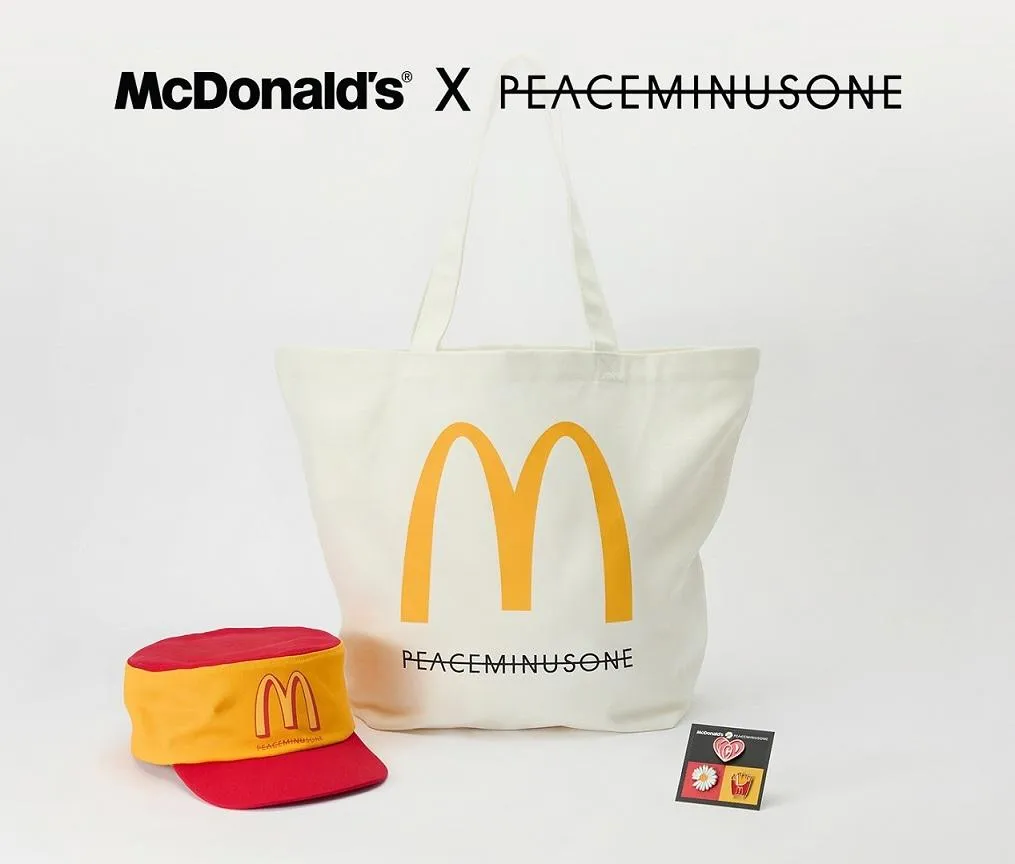
▍PEACEMINUSONE × McDonald's
From collaborative sneakers to dining peripherals, PEACEMINUSONE has formed a set of recognizable brand symbols and has the ability to convert celebrity influence into product sales. This also provides a consumer base for its expansion into the beauty field.
It is worth noting that G-Dragon actually invested in the beauty industry as early as ten years ago.
In 2016 year 1 month, G-Dragon and BIGBANG member Taeyang jointly invested in a company under YG Entertainment and a Korean beauty company, totaling 36 hundred million Korean won (approximately RMB 1800 ten thousand yuan). Among them, G-Dragon personally invested 30 hundred million Korean won (approximately RMB 1500 ten thousand yuan), and 10 hundred million Korean won (approximately RMB 500 ten thousand yuan) was invested in the operating company of the Korean beauty brand Moonshot.
During the same period, G-Dragon also served as brand ambassador for Moonshot together with 2NE1 member Sandara Park, participating in product promotion.
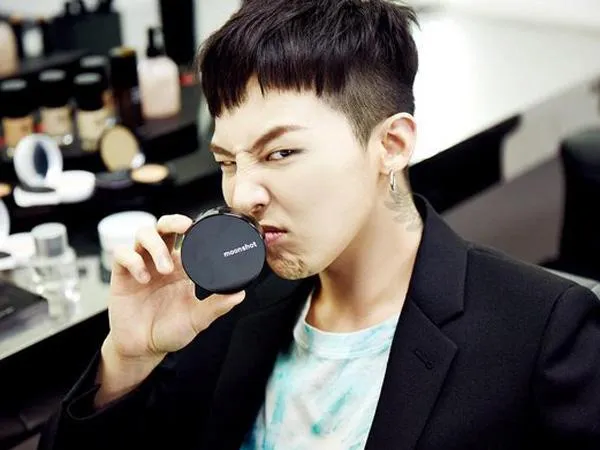
▍G-Dragon participated in product promotion for the Korean beauty brand Moonshot
This means that G-Dragon was already involved in the beauty business as both an investor and a spokesperson at that time. Ten years later, G-Dragon is beginning to directly use PEACEMINUSONE's brand assets for the beauty business.
The newly launched PEACEMINUSONE BEAUTY directly uses the name of the fashion brand he has operated for many years. According to the plan disclosed by both parties,the new brand will be cultivated as a long-term independent beauty brand, with cooperation covering brand concept and product development, rather than just launching a batch of limited-edition collaborative products。
Currently, PEACEMINUSONE BEAUTY has opened independent social media accounts, but specific product categories, prices, and sales channels have not been announced. The two parties have also not disclosed the new brand's equity structure, investment amount, or G-Dragon's personal shareholding or income arrangements.
Compared to investing in Moonshot's operating company ten years ago, this cooperation allows G-Dragon's own fashion brand to directly enter the beauty industry. However, PEACEMINUSONE's past expertise in trendy product operations is still quite different from the long-term product development, production, and sales of cosmetics. GOODAI GLOBAL will become an important partner for the new brand's launch.

What GOODAI GLOBAL has been best at in the past is acquiring promising Korean beauty brands and then using its overseas channels and operational capabilities to grow these brands' businesses.
This group originally started with beauty product distribution. In 2017 year, GOODAI GLOBAL obtained the exclusive distribution rights for Beauty of Joseon, and officially acquired the brand in 2019 year. Since then, Beauty of Joseon has become popular in European and American markets with products such as rice sunscreen, and has also become the most important growth engine for GOODAI GLOBAL in its early days.
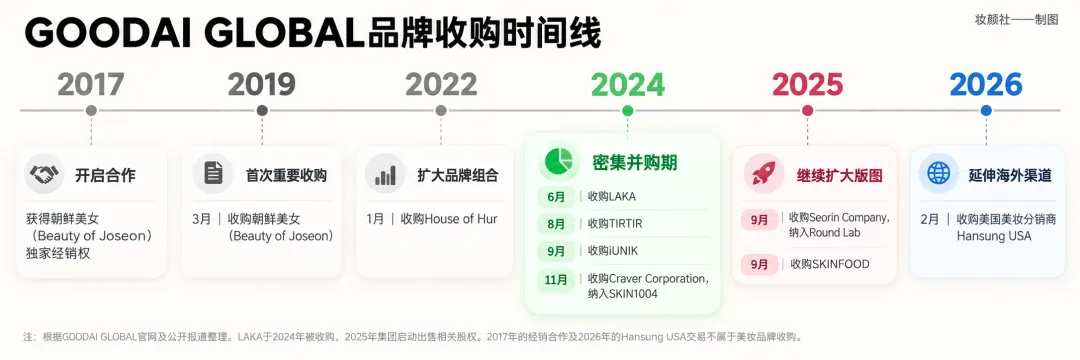
After tasting success, GOODAI GLOBAL began large-scale acquisitions.
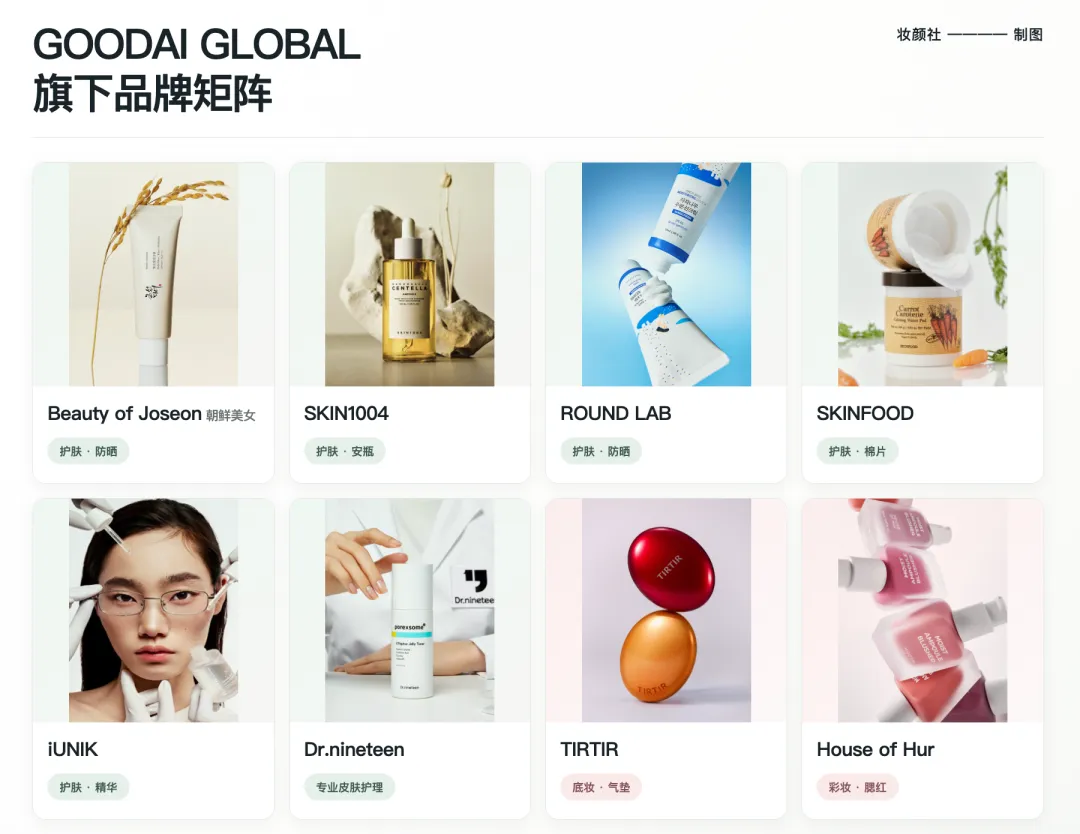
In 2024 year, the group successively acquired TIRTIR, iUNIK, and the operating company of SKIN1004, Craver Corporation; in 2025 year, it further acquired Round Lab's parent company Seorin Company and the established Korean cosmetics brand SKINFOOD. In just two years, GOODAI GLOBAL established a brand matrix covering multiple categories such as sunscreen, base makeup, and functional skincare.
Intensive acquisitions directly drove the rapid expansion of the group's scale.
In 2023, GOODAI GLOBAL's consolidated revenue was only about 1400 hundred million Korean won (approximately RMB 7 hundred million yuan); by 2025, this figure had grown to 1.47 trillion Korean won (approximately RMB 74 hundred million yuan), with operating profit reaching 2734 hundred million Korean won (approximately RMB 13.7 hundred million yuan). In 2025 alone, the group's revenue increased by about 294% year-on-year, and operating profit increased by about 98% year-on-year.
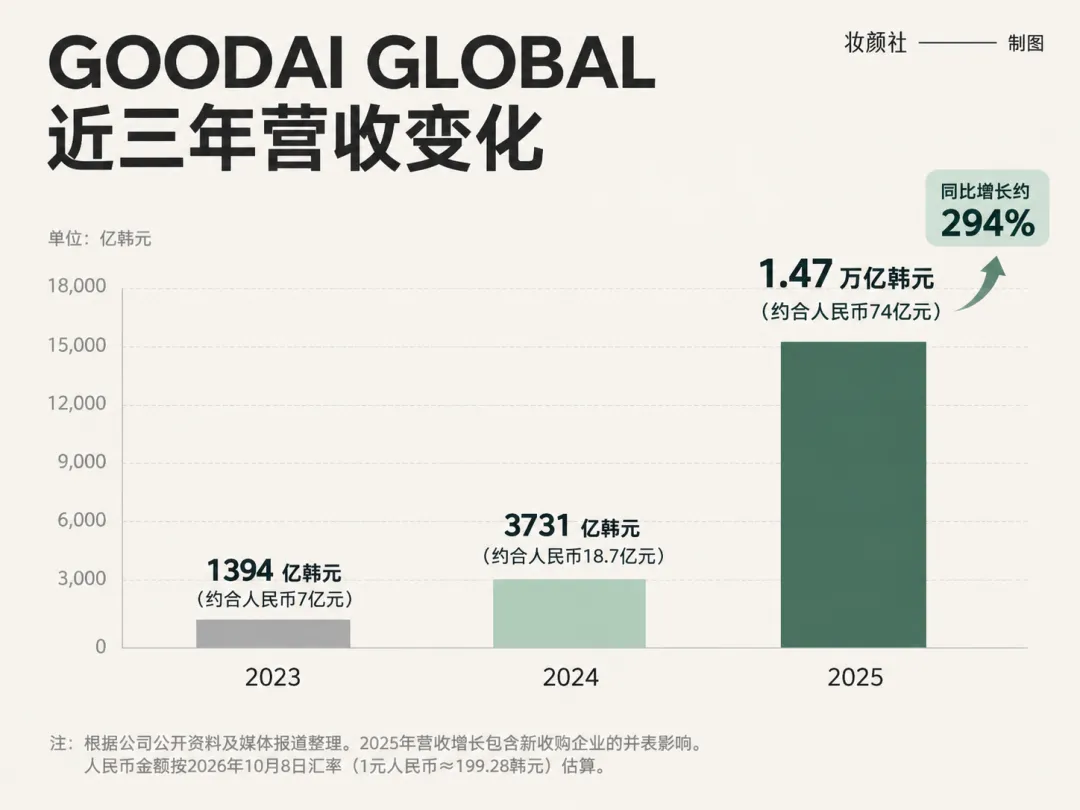
It should be noted that this round of performance growth includes revenue increases from a large number of acquisitions. Since the performance of some acquired companies is only included in the financial statements from the consolidation date, if the full-year 2025 performance of its major subsidiaries were simply added together, GOODAI GLOBAL's revenue scale would reach approximately 1.75 trillion Korean won (approximately RMB 88 hundred million yuan).
Currently, SKIN1004, Joseon Beauty, TIRTIR, and Round Lab have become the group's four core brands. According to data disclosed in 2025, the four contribute approximately 34.2%, 28.1%, 18.8%, and 14% of revenue respectively, with each brand's annual revenue exceeding 2000 hundred million Korean won (approximately RMB 10 hundred million yuan).
GOODAI GLOBAL has been able to grow rapidly in a short period of time not only because of its continuous acquisition of best-selling brands, but also because it has strong overseas sales capabilities. More than 90% of the group's revenue comes from overseas markets, and its brands have a broad consumer base in markets such as the United States, Japan, and Europe.
Moreover, GOODAI GLOBAL has begun to directly acquire overseas distribution channels.
In 2026 2, the group acquired the American K-beauty distributor Hansung USA for approximately 1000 hundred million Korean won (approximately RMB 5 hundred million yuan). The latter supplies Korean beauty products to American retail channels such as Ulta Beauty and Costco. Combined with the global beauty wholesale platform UMMA obtained from the earlier acquisition of Craver Corporation, GOODAI GLOBAL has already mastered some capabilities from brand operation to overseas distribution.
However, after entering 2026, GOODAI GLOBAL's expansion approach began to change.
In 7 of this year, the group signed a strategic investment cooperation memorandum with the Korean skincare brand Torriden, planning to participate in its overseas business expansion through a minority equity investment. This is also the first time GOODAI GLOBAL has publicly proposed cooperating with external brands through minority equity investment rather than directly acquiring operational control.
On 10 1, the group launched a new oral beauty brand ISEVI, with its first product being a lemon-flavored sparkling beverage, sold through Korea's Olive Young channel. This is also an attempt by GOODAI GLOBAL to expand into the oral beauty field.
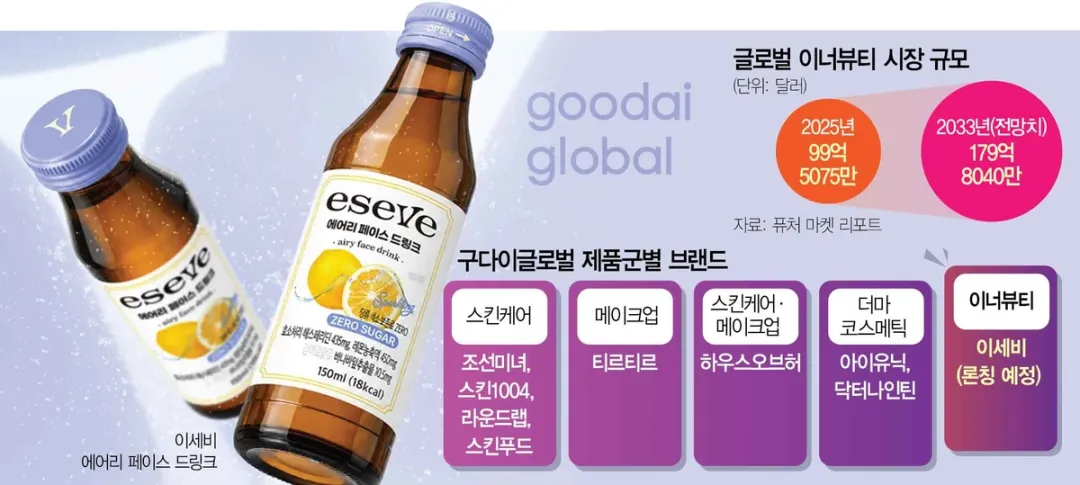
▍eseve oral beauty drink
Just one week later, G-Dragon's PEACEMINUSONE BEAUTY cooperation plan was officially announced.
Looking at these moves together, GOODAI GLOBAL's brand expansion now has more options: it can directly acquire mature brands, establish cooperative relationships through minority equity investments, or develop new brands relying on existing resources.
In the Korean beauty industry, GOODAI GLOBAL is even regarded as a rising "Korean version of L'Oréal."
This title mainly stems from its M&A strategy. Looking back at L'Oréal's development history, from Maybelline, Kiehl's, La Roche-Posay, to later CeraVe and Aesop, the group has gradually built a vast brand matrix covering mass cosmetics, high-end beauty, dermatological beauty, and professional hair care through continuous acquisitions of beauty brands in different categories and price ranges.
GOODAI GLOBAL is expanding along a similar path. It brings independent brands that have proven commercial potential in the market under its umbrella, and then supports their further growth through the group's capital, operations, and overseas channel resources. Compared with the development approach of traditional Korean beauty groups that mainly focus on independently developing brands, GOODAI GLOBAL's acquisition strategy is more aggressive, and the expansion speed of its brand portfolio is also faster.
The similarities between the two companies also extend to brand collaborations. In 2025, L'Oréal reached a long-term exclusive beauty collaboration with the French fashion brand Jacquemus and made a minority equity investment in it. Now, GOODAI GLOBAL is also setting its sights on G-Dragon's PEACEMINUSONE, hoping to develop new beauty business with the help of a mature fashion IP.
Of course, GOODAI GLOBAL still has a long way to go before it becomes a true L'Oréal. L'Oréal's revenue in 2025 reached 440.5 hundred million euros (approximately RMB 3600 hundred million yuan), and it has a mature global R&D, production, and channel system. GOODAI GLOBAL's current core competitiveness is more reflected in brand acquisition, integration, and overseas distribution. It has already proven its ability to select and integrate best-selling brands, and next it needs to prove whether it can continuously cultivate new brands and maintain the long-term growth of multiple brands.
At the same time, GOODAI GLOBAL is advancing its listing on the Korean main board. The group has formed an underwriting team including institutions such as Mirae Asset Securities and Morgan Stanley, and there are even valuation expectations as high as 10 trillion Korean won (approximately RMB 500 hundred million yuan) in the market. However, this valuation has not been finalized, and the group's complex subsidiary equity structure and sustained profitability are also of concern to the capital market.
For GOODAI GLOBAL, which already owns multiple best-selling brands, it is very important to continue proving its brand management capabilities. And collaborating with G-Dragon to create PEACEMINUSONE BEAUTY will also become an attempt by this Korean beauty group to test its ability to incubate new brands.

Celebrities founding beauty brands has become a fairly mature business. In recent years, a noteworthy change is that more and more companies with R&D, production, and channel resources have begun to directly participate in the investment and incubation of celebrity brands.
This cooperation model has also emerged in the Chinese market.
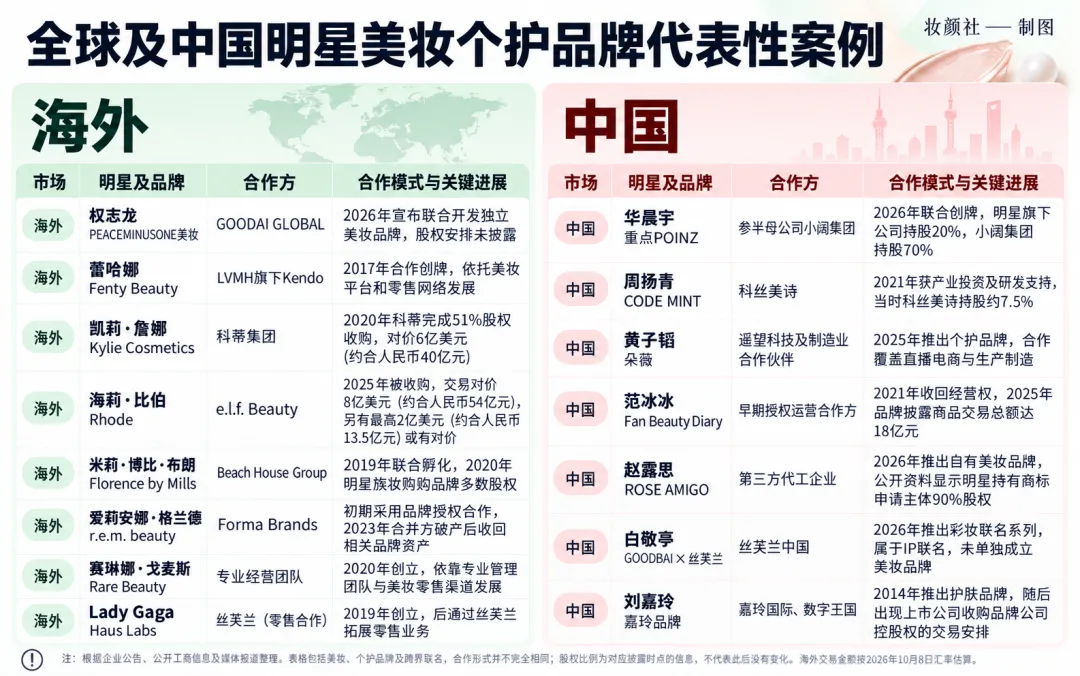
In 3 of this year, Hua Chenyu and the parent company of Canban, Xiaokuo Group, jointly launched the personal care brand "POINZ," with Hua Chenyu serving as co-founder of the brand. According to public business registration information, the brand's operating entity, Shenzhen Huakuo Biotechnology Co., Ltd., is 70% owned by a subsidiary of Xiaokuo Group, 20% owned by a company controlled by Hua Chenyu, and the remaining 10% held by another company.
The cooperation between the two parties has already involved brand equity and long-term operations. Hua Chenyu participates in brand positioning, visual image, and product selection, while Xiaokuo Group provides product development and operational resources in the daily chemical field. On the first day of the new brand's launch, the total merchandise transaction volume across all channels exceeded 2100 ten thousand yuan.
In fact, capital cooperation between domestic celebrities and beauty industry enterprises can be traced back even earlier.
In 2021, when Zhou Yangqing founded the color cosmetics brand CODE MINT, the Korean beauty OEM group Cosmax participated as an angel investor. According to business registration information disclosed at the time, Cosmax held approximately 7.5% of the shares in the brand operating company, and also provided a team of 20 people to participate in packaging material development, product R&D, and production.
From the international market perspective, collaborations between celebrities and industrial groups have developed into more forms. Rihanna co-created Fenty Beauty with Kendo under LVMH, Kylie Jenner's Kylie Cosmetics later received a controlling stake from Coty, and Hailey Bieber's Rhode was acquired by e.l.f. Beauty in 2025.
The common point of these cases is that a celebrity's personal influence has become a brand resource with transactional value. However, the timing of industrial enterprises' involvement, shareholding ratios, and management rights arrangements vary.
For beauty groups, the greatest attraction of co-founding a brand with a celebrity lies inbeing able to shorten the process of building market awareness for a new brand.
Traditional beauty brands launching new products often need to continuously invest in advertising, influencer marketing, and channel promotion to gradually accumulate consumer awareness. A celebrity with a mature fan base inherently possesses certain communication capabilities, and their personal aesthetics, lifestyle, and cultural influence can also be directly used for brand positioning and product design.
If the collaboration further involves equity, the interests of both parties can also be tied to the brand's long-term operating performance. The industrial enterprise gains a new brand with visibility, while the celebrity has the opportunity to share in the benefits brought by brand growth through shareholding. This is clearly different in business structure from the cooperation method of paying endorsement fees annually.
But for celebrities, whether they own equity and to what extent they can decide product development and brand management are equally important.
Ariana Grande's r.e.m. beauty is an example. In the early stage, the brand adopted a licensing cooperation model with Forma Brands, with the latter participating in product development, production, and sales. After Forma Brands filed for bankruptcy protection in 2023, Grande's company acquired the brand-related assets through bankruptcy proceedings and regained operational initiative.
This also means that even if a brand directly uses a celebrity's personal image and creativity, how the commercial value is distributed still depends on the underlying licensing agreement, equity structure, and operational arrangements.
For industrial enterprises, celebrity collaborations also carry risks.
The traffic brought by a celebrity can drive initial product sales, but it cannot directly determine the brand's profitability. Duowei, founded by Huang Zitao, is a case worth observing. In 2026 5, the brand disclosed that its cumulative gross merchandise volume exceeded 7 hundred million yuan in the year since its establishment, with a repurchase rate of 58.57%. However, according to reports, as of the first quarter of this year, the business had still not achieved profitability.
There is a clear difference between gross merchandise volume and a company's actual revenue and profit. Celebrity brands can quickly obtain a large number of orders, but product gross margin, marketing investment, channel costs, and supply chain costs ultimately determine whether the business can continue to make money.
The collaboration between G-Dragon and GOODAI GLOBAL will also face similar tests.
PEACEMINUSONE has already established mature consumer awareness in the fashion field, but after entering the beauty market, it still needs to find core products that can sustain sales. GOODAI GLOBAL can provide mature brand operations and overseas channel resources, but cannot guarantee the success of a new brand based solely on these resources.
Particularly noteworthy is how the two parties will arrange brand ownership, product development leadership, and operating income in the future. Currently, these key commercial details have not been disclosed.
For GOODAI GLOBAL, PEACEMINUSONE BEAUTY will test whether it can use the operational capabilities accumulated through previous acquisitions and integrations to build a new global beauty brand. G-Dragon's influence can help the brand gain market attention, but what ultimately determines the long-term value of this collaboration is still product sales and sustained profitability.